Is Hue Worth Visiting? My Honest Review in 2026
If you’re planning a trip through Vietnam, you’ve probably hit the same fork in the road every traveller runs into: Hanoi and Ho Chi Minh City are non-negotiable, Hoi An is famous for its lanterns, Da Nang has the beaches… so is Hue worth visiting, or is it just a filler stop in the middle?
It’s a fair question. Hue doesn’t have Hanoi’s chaos, Hoi An’s Instagram appeal, or Ha Long Bay’s wow factor. What it does have is something quieter and, honestly, more interesting: it’s the only place in Vietnam where you can walk through a real imperial palace, eat dishes that were literally invented for emperors, and stand on battlefields that shaped modern history — all in one compact, slow-moving city on a river.
Short answer: yes, Hue is worth visiting! But only if you know what you’re coming for. This guide breaks down exactly who Hue is right for, who should probably skip it, what to actually do here, and how many days you really need. By the end, you’ll know whether to slot Hue into your Vietnam itinerary or spend those days somewhere else.
Is Hue Worth Visiting? The Quick Answer
Yes! Hue is worth visiting if you care about history, culture, food, or seeing a quieter side of Vietnam. It’s home to a UNESCO World Heritage Imperial City, some of the country’s best regional cuisine, dramatic royal tombs scattered along the Perfume River, and a slower, more reflective vibe than the big tourist cities. Two days is the sweet spot for most travellers.
Skip it if: you’re on a tight 7-day Vietnam trip focused on beaches and shopping, or you’ve already had your fill of temples and pagodas earlier in the journey.
A Bit of Context: Why Hue Matters
Before we get into the practical stuff, it helps to know why Hue exists at all, because this is the lens that makes everything else click.
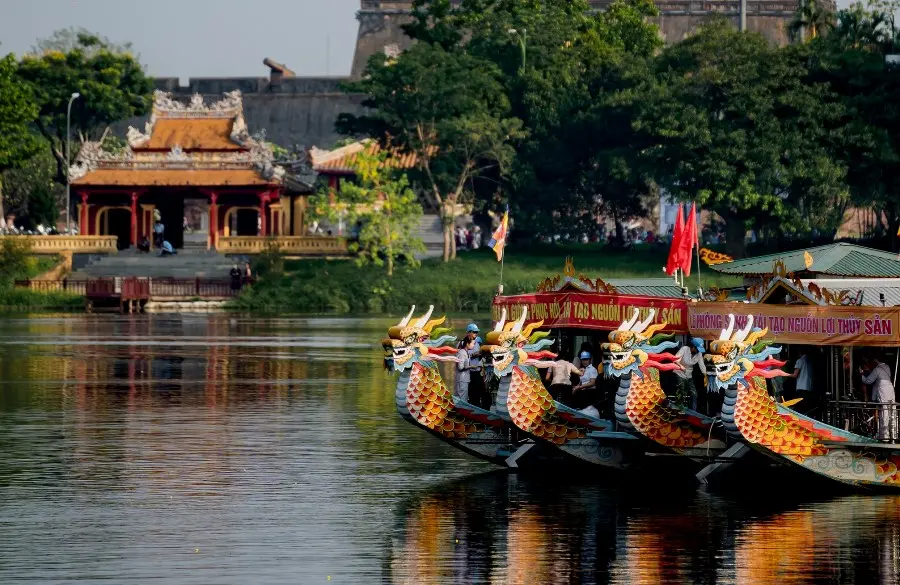
From 1802 to 1945, Hue was the capital of Vietnam under the Nguyen Dynasty, the country’s last royal family. The emperors built their entire seat of power here: a walled Imperial City modelled on Beijing’s Forbidden City, elaborate tombs in the surrounding hills, and pagodas along the Perfume River. Then, during the Vietnam War, Hue became the site of one of the conflict’s most brutal battles in 1968, which destroyed a huge chunk of the historic centre.
So what you’re walking through today is layered: imperial grandeur, war damage, careful restoration, and modern Vietnamese life all happening in the same square mile. That layering is what makes Hue feel different from anywhere else in the country.
Is Hue Worth It for Your Trip?
Whether Hue earns a spot on your itinerary really depends on what kind of traveller you are. Here’s a straightforward breakdown.
You’ll love Hue if you’re into:
- History and culture – this is arguably Vietnam’s most historically significant city
- Food –Hue cuisine is genuinely distinct, with dishes like bun bo Hue, banh khoai, and com hen you won’t find done as well anywhere else
- Slower travel – fewer scooters, less honking, easier to wander
- Architecture – royal tombs, pagodas, and the citadel are unreal
You might want to skip Hue if:
- You only have 5–7 days in Vietnam and want beaches or city energy
- You’ve already seen many other temples and you feel templed-out
- You travel mostly for nightlife and shopping (Hue is sleepy after 10pm)
- Your interest in the Vietnam War or Nguyen Dynasty is genuinely zero
Still asking yourself is Hue worth going to after reading that? If you ticked even two items from the first list, the answer is yes.
The Best Things to Do in Hue (And Whether They’re Worth It)
Not everything in Hue is a must-see. Here are the experiences that actually justify the trip, ranked roughly by how much they add to your visit.
1. The Imperial City (Citadel)
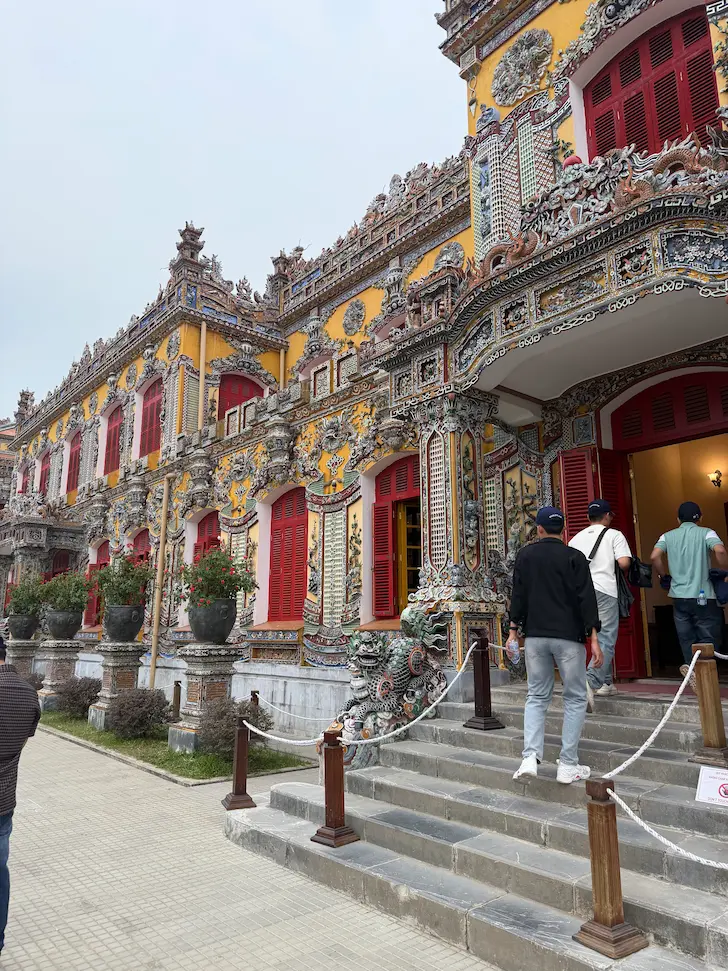
This is the headline attraction and the main reason most people come to Hue. The Imperial City is a vast walled complex of palaces, courtyards, gates, and gardens that served as the political heart of Vietnam for nearly 150 years.
Plan on 3–4 hours minimum. Sections were destroyed during the 1968 Tet Offensive and you can still see bullet holes in some walls, which actually makes it more powerful, not less. Restoration work is ongoing, so each year a bit more comes back to life.
Tip: going with a guide makes a huge difference here. Without context, it’s pretty stones; with context, it’s a story. A half-day guided tour is genuinely one of the best things you can do in the city. I’d reccomend this tour.
2. The Royal Tombs Along the Perfume River
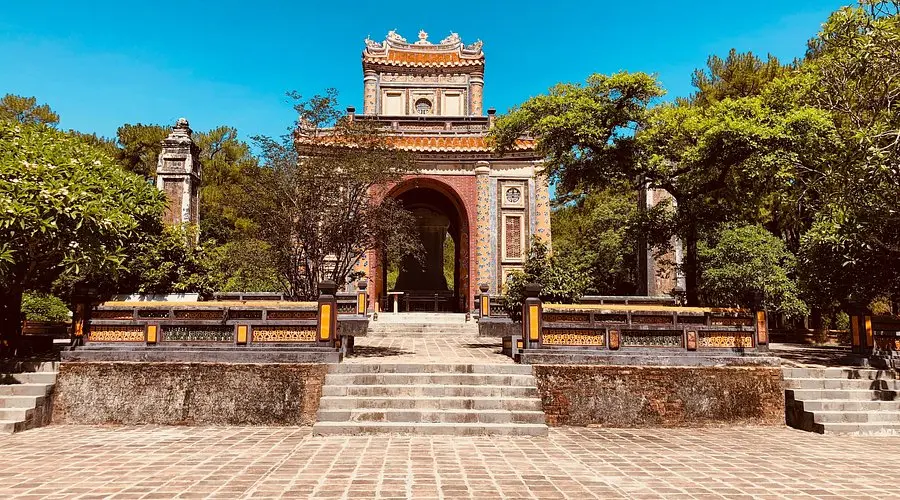
Seven Nguyen emperors built elaborate tombs in the hills south of the city, and visiting them is hands-down one of the most underrated experiences in Vietnam. The three best are:
- Tu Duc’s Tomb – the most beautiful and atmospheric, with lakes, pavilions, and pine forests
- Khai Dinh’s Tomb – wildly ornate, a strange and stunning blend of European and Vietnamese styles
- Minh Mang’s Tomb – the most serene, with classic Confucian symmetry and gardens
They’re spread out, so you’ll want either a motorbike, a private car, or an organised day trip. A boat tour along the Perfume River that combines a few tombs with Thien Mu Pagoda is a classic Hue day out and worth every dong.
3. Thien Mu Pagoda
A seven-storey pagoda on a bluff above the Perfume River, and one of the most photographed spots in Hue. It’s also where the famous Austin car that drove the monk Thich Quang Duc to his self-immolation in 1963 is still on display, a sobering, important piece of history. Easy to combine with a boat tour.
4. The DMZ and Vinh Moc Tunnels
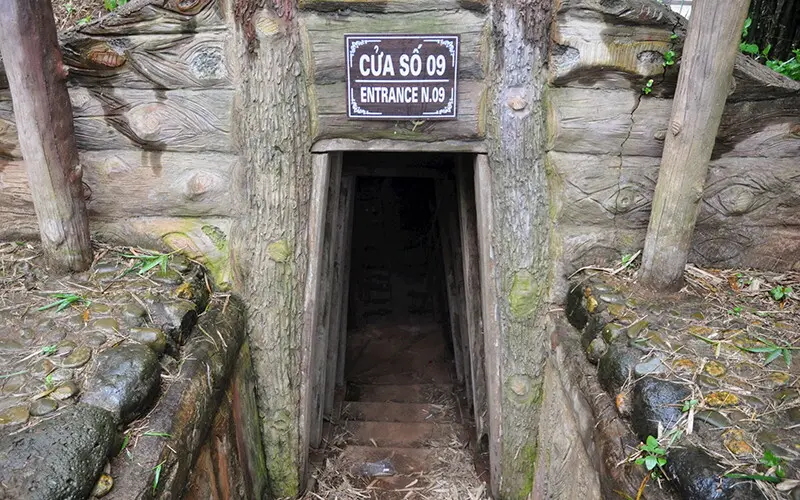
About two hours north of Hue lies the former Demilitarised Zone (DMZ). This is the line that split North and South Vietnam during the war. The Vinh Moc Tunnels here are arguably more impressive than the better-known Cu Chi Tunnels near Ho Chi Minh City, because an entire village actually lived inside them for years to escape the bombing.
If you have any interest in 20th-century history, this is essential. It’s a long day, so going with a small-group tour that handles transport and a guide is the easiest way to do it.
5. Eating Your Way Through Hue
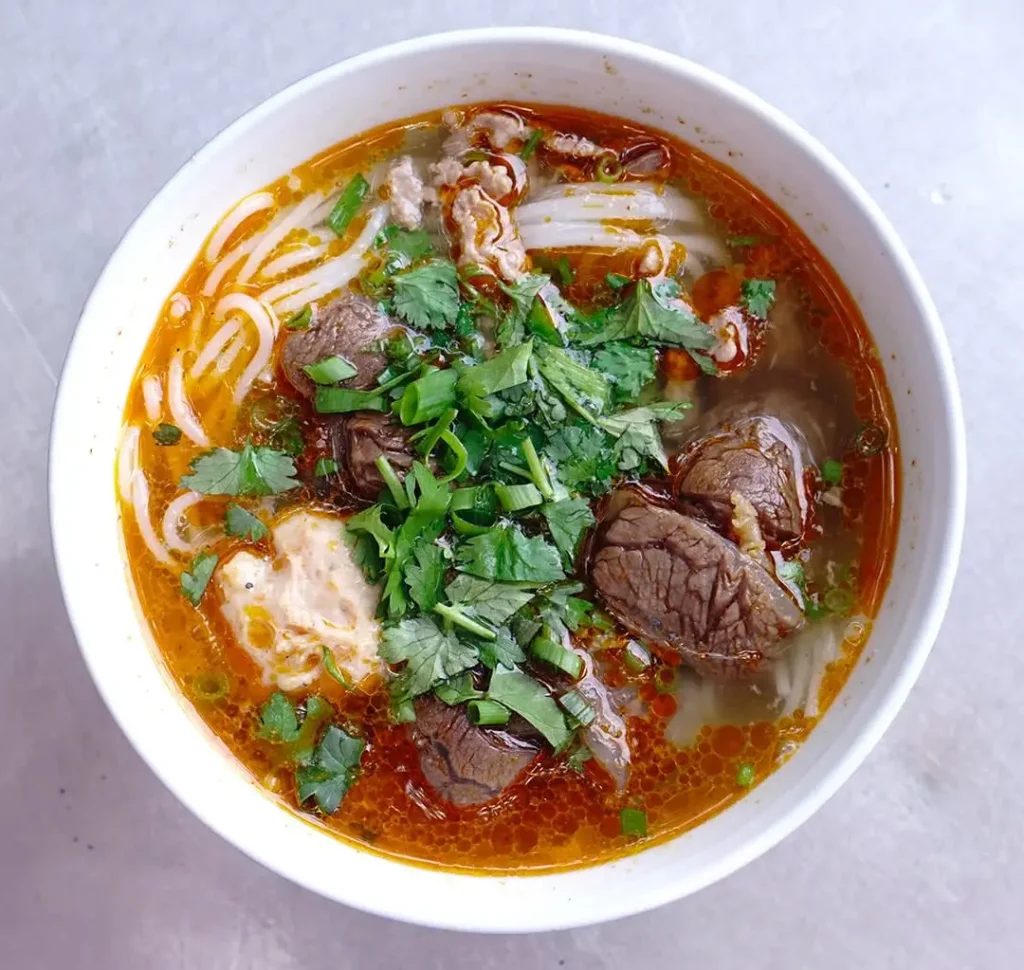
Honestly, the food alone almost answers the question of whether Hue is worth visiting. Imperial cuisine was developed to please picky emperors, so dishes here are more refined, more varied, and more spice-forward than in the rest of Vietnam.
Must-try dishes:
- Bun bo Hue – spicy beef noodle soup, and the version born here blows the imitators away
- Banh khoai – crispy yellow pancakes stuffed with pork and prawns
- Com hen – rice with baby clams; a humble local specialty
- Nem lui – lemongrass-skewered pork you wrap into rice paper rolls yourself
- Che –Hue’s sweet dessert soups, served in dozens of varieties
A guided food tour with a local, especially in the evening when the night markets fire up, is one of the easiest ways to try a lot in a short time without ending up at tourist traps.
6. A Dragon Boat Cruise on the Perfume River
Touristy? A little. Worth it? Yes, especially at sunset. The boats are gaudy and the soundtracks corny, but watching the city slide past from the water gives you a different sense of why the Nguyen emperors chose this place.
7. Abandoned Ho Thuy Tien Water Park
Niche pick. A surreal abandoned water park on the city’s outskirts, complete with a giant dragon sculpture rising out of a lake. It’s been semi-officially reopened for visitors and is hands-down one of the strangest, most photogenic spots in central Vietnam. Skip if you don’t like that kind of thing; otherwise, very worth the scooter ride.
How Many Days Do You Need in Hue?
The honest answer: two days is the sweet spot.
- 1 day – doable if you’re on a tight schedule. Hit the Imperial City in the morning, a couple of royal tombs in the afternoon, and a food tour or river cruise in the evening. You’ll feel rushed.
- 2 days – the ideal. Day one for the citadel and city food; day two for the tombs, Thien Mu, and a relaxed evening on the river.
- 3 days – add the DMZ and Vinh Moc Tunnels, or a cooking class, or just slow down.
- 4+ days – only if you’re a serious history buff or want a quiet base for a week.
Getting to Hue (And When to Go)
Hue sits in central Vietnam, between Hanoi and Ho Chi Minh City. Most travellers arrive one of three ways:
- From Hoi An / Da Nang – via the famous Hai Van Pass route. The drive is one of the most scenic in Vietnam, and a private car or motorbike transfer (with stops at Lang Co Beach, Marble Mountains, and Hai Van Pass) is a trip highlight in itself
- By train – the Hanoi–Saigon rail line stops in Hue. Slower, scenic, atmospheric
- By plane – Hue’s small airport (Phu Bai International Airport) has connections from Hanoi and HCMC
My recommendation is taking the Hoi An to Hue motorbike transfer over Hai Van Pass, which is hands down one of the best travel days you’ll have in Vietnam.
Best Time to Visit Hue
- February to April – the sweet spot: dry, mild, and the gardens are in bloom
- May to August – very hot and humid (35°C+), but quieter
- September to January – rainy season; Hue is one of the wettest cities in Vietnam, so prepare for grey skies and flooding
Where to Stay in Hue
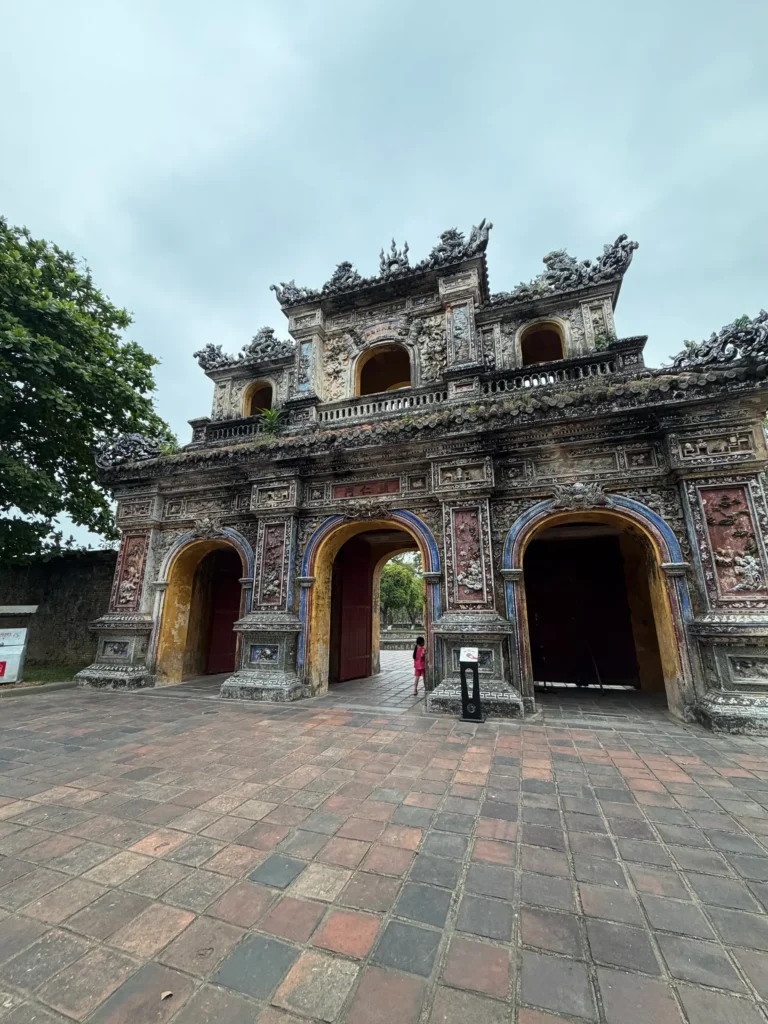
Hue is small enough that location matters less than in the big cities, but here’s the lay of the land:
- South of the river (around Pham Ngu Lao / Vo Thi Sau) – the main backpacker and tourist area, with restaurants, bars, and tour offices
- Along the riverfront – nicer hotels, quieter, great for sunset views
- Inside the citadel area – more local feel, fewer foreigners, atmospheric in the mornings
For a city this affordable, it’s genuinely worth bumping up to a 4-star riverside hotel, you’ll pay mid-range prices for properties that feel premium.
Hue Hotel Recommendations:
Budget: Canary Boutique Hotel ⭐⭐
Mid-range: Vedana Lagoon Resort & Spa ⭐⭐⭐⭐⭐
Luxury: Azerai La Résidence ⭐⭐⭐⭐⭐
Frequently Asked Questions Travellers Ask About Hue
They serve different purposes, don’t make it either/or if you can help it. Hoi An is for atmosphere, tailoring, lanterns, and beach access. Hue is for history, depth, and food. If you genuinely have to choose one and you lean cultural, pick Hue. If you lean lifestyle and relaxation, pick Hoi An. They’re only three hours apart, so most travellers do both.
Very. It’s one of the safest, calmest cities in Vietnam. Normal travel precautions apply, but violent crime against tourists is rare and the city has a relaxed vibe overall.
It’s enough to see the Imperial City and grab a great meal, but you’ll miss the royal tombs and the slower river experiences that make Hue special. Two days is much better.
It’s quieter than Hanoi or HCMC, that’s the point. If you find a UNESCO imperial palace, royal tombs, war history, and one of Asia’s most distinct cuisines boring, then yes, Hue might not be for you. For everyone else, it’s a welcome breather from the hustle and bustle of the bigger cities.
Honestly, kind of yes. Hue in the rain is moody and beautiful, the citadel walls darken, the river goes silver, and the cafes get cosy. Just pack waterproofs and don’t plan motorbike days during heavy downpours.
Final Verdict: Is Hue Worth Visiting?
Yes, Hue is worth visiting, and for the right traveller it’s one of the most rewarding stops in Vietnam. It won’t dazzle you the way Ha Long Bay does or charm you instantly like Hoi An, but it sticks with you longer. The Imperial City, the tombs, the food, the layered history… these are the cultural backbone of modern Vietnam.
Give it two days. Go with a guide for at least one of them. Eat as much bun bo Hue as humanly possible. Watch the sun set over the Perfume River and ask yourself if any of the louder cities in Vietnam gave you a moment like this.

Check Out my Other Hue Guides
Hue Itinerary: The Perfect Guide for your visit
Is Hue Worth Visiting: My Honest Review
Where to Stay in Hue: The Best Hotels & Areas
Best Time to Visit Hue: Month-by-Month Guide
Hue Food Guide: What to Eat in Hue
How to Get to Hue: Guide to All Transport Options
Check Out My Other Vietnam Guides
2 Week Vietnam Itinerary: The Ultimate Guide for First Time Visitors
What is the Best Halong Bay Cruise?: Options for All Budgets
The Best Esim For Vietnam: My Review of 3 ESim Providers