The Ultimate 2 Week Vietnam Itinerary: From North To South (2026)
Vietnam is one of those rare countries that grips you from the moment you land. By following this 2 Week Vietnam itinerary you can ride a boat through the otherworldly islands of Ha Long Bay, wander the lantern-lit streets of Hoi An’s Ancient Town, eat bowls of pho at 8am in Hanoi, and feel the electric pulse of Ho Chi Minh City…all in a single trip!
This 14-day Vietnam itinerary takes you from north to south, flying into Hanoi and out of Ho Chi Minh City (Saigon). It’s the ideal route for first-time visitors: you follow the logical geography, avoid backtracking, and experience the full sweep of Vietnam’s culture, history, landscapes, and food.
I’ve traveled this route and road-tested every recommendation in this guide. Below, you’ll find a day-by-day breakdown, practical tips, accommodation suggestions, and everything you need to plan the trip of a lifetime.
Please note: This post contains affiliate links, meaning I may earn a commission if you make a purchase by clicking a link (at no extra cost to you). Thank you for supporting my blog!
Why Vietnam is Perfect for a 2-Week Trip
A Country Made for a North-to-South Journey
Vietnam stretches over 1,600 kilometers from north to south. Its narrow shape means every destination is just a short domestic flight or scenic train ride apart. Flying into Hanoi and out of Ho Chi Minh City eliminates all backtracking and lets you experience how dramatically the landscape, architecture, and even the food shifts as you travel south.
The north feels ancient and atmospheric: misty mountains, French colonial boulevards, and a cuisine built around delicate broths. The central region is Vietnam’s cultural heart: imperial cities, UNESCO-listed towns, and the country’s most celebrated dishes. The south pulses with energy, heat, and a more cosmopolitan spirit shaped by centuries of trade. This 2 week Vietnam itinerary lets you experience all three.
When is the best time to visit Vietnam?
Vietnam’s climate is complicated by its length. No single month is perfect for the entire country, but here’s a simple breakdown:
- November to April: Best for the south (Ho Chi Minh City, Mekong) and central coast (Hoi An, Da Nang). Dry and warm.
- March to May: The sweet spot for the whole country before summer crowds arrive.
- May to October: Rainy season in the south, but Hanoi and the north are at their greenest.
- December to February: Cool and dry in the north (pack your layers!)
💡 Pro Tip: If you can only pick one window, aim for somewhen between February to April. You’ll get manageable crowds, dry weather across most regions, and pleasant temperatures throughout.
How to Get Around Vietnam
Getting around Vietnam is straightforward and affordable. Here are your main options for this route:
- Domestic flights: The fastest option between major cities. Vietnam Airlines, Bamboo Airways, and VietJet all operate frequent routes at reasonable prices when booked in advance.
- Railway: Vietnam has train lines running the full length of the country. A great way to relax and see some epic landscapes on the way!
- Sleeper buses: The budget option between cities. The journey can be crazy at times, but you might be able to rest well knowing you’ve saved a ton of money!
- Grab: Southeast Asia’s Uber equivalent. Essential for getting around within cities.
All buses amd trains in this guide can be booked through 12Go Asia – it’s the easiest way to compare routes and times across Vietnam without trawling multiple sites.
2 Week Vietnam Itinerary at a Glance
Days | Location | Highlights | Nights |
|---|---|---|---|
Days 1 – 3 | Hanoi | Old Quarter, Hoan Kiem Lake, street food | 3 |
Days 4 – 5 | Ha Long Bay | Cruise, kayaking, mindblowing scenery | 1 on board |
Days 6 – 7 | Hue | Imperial Citadel, royal tombs, bún bò Huế | 2 |
Days 8 – 9 | Hoi An | Ancient Town, tailors, My Son | 2 |
Day 10 | Da Nang | Marble Mountains, beach | 1 |
Days 11 – 12 | Da Lat or Nha Trang | Highlands or beach escape | 2 |
Days 13 – 14 | Ho Chi Minh City | War Museum, Ben Thanh Market, Mekong day trip | 2 |
Days 1 – 3: Hanoi
Your first stop on the 2 week Vietnam itinerary! Hanoi is a city that rewards slow exploration. Its streets are chaotic and beautiful in equal measure! Motorbikes weave around French colonial architecture, street vendors ladle pho from steaming pots at pavement level, and centuries-old temples sit tucked between noodle shops. Give it three days and it will earn a permanent place in your heart. I’ve written a dedicated 3-day Hanoi itinerary that goes much deeper on neighbourhoods, restaurants, and day trips but here’s the summary of what you need to now:
Getting Your Bearings in the Old Quarter
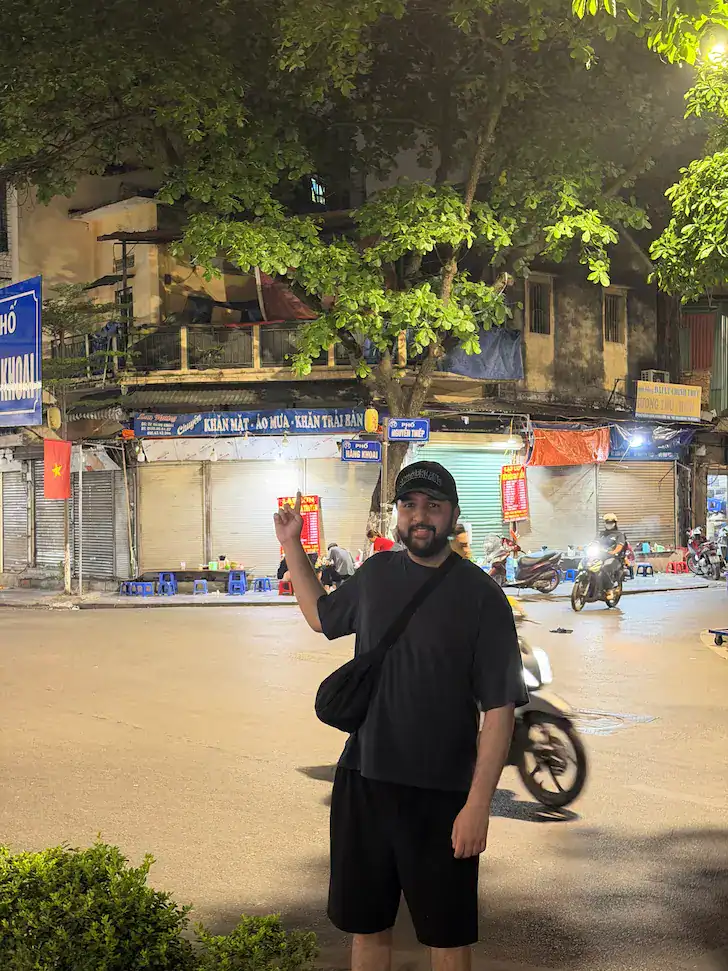
Your base for Hanoi is almost certainly going to be the Old Quarter: a 36-street maze originally organised by trade guilds, where Hang Bac (Silver Street) and Hang Gai (Silk Street) are still named after the crafts sold there. It’s dense, overwhelming, and completely addictive.
Start your first morning with a walk around Hoan Kiem Lake. The red Huc Bridge leading to Ngoc Son Temple is one of the most photographed spots in the country (go early to beat the crowds). Then just wander. Getting slightly lost in the Old Quarter is, genuinely, the point.
Alternatively, unique and fun way to explore Hanoi is on the back of a Vintage Military Jeep Tour!
Top Things to Do in Hanoi
- Hoan Kiem Lake and Ngoc Son Temple – the spiritual and geographic centre of the city.
- Ho Chi Minh Mausoleum complex – visit the mausoleum, the stilt house, and the One Pillar Pagoda.
- Vietnam Museum of Ethnology – one of the best museums in Southeast Asia, where you will learn about Vietnam’s 54 ethnic groups.
- Hoa Lo Prison (the ‘Hanoi Hilton’) – now converted to a museum, providing a sobering and essential history lesson.
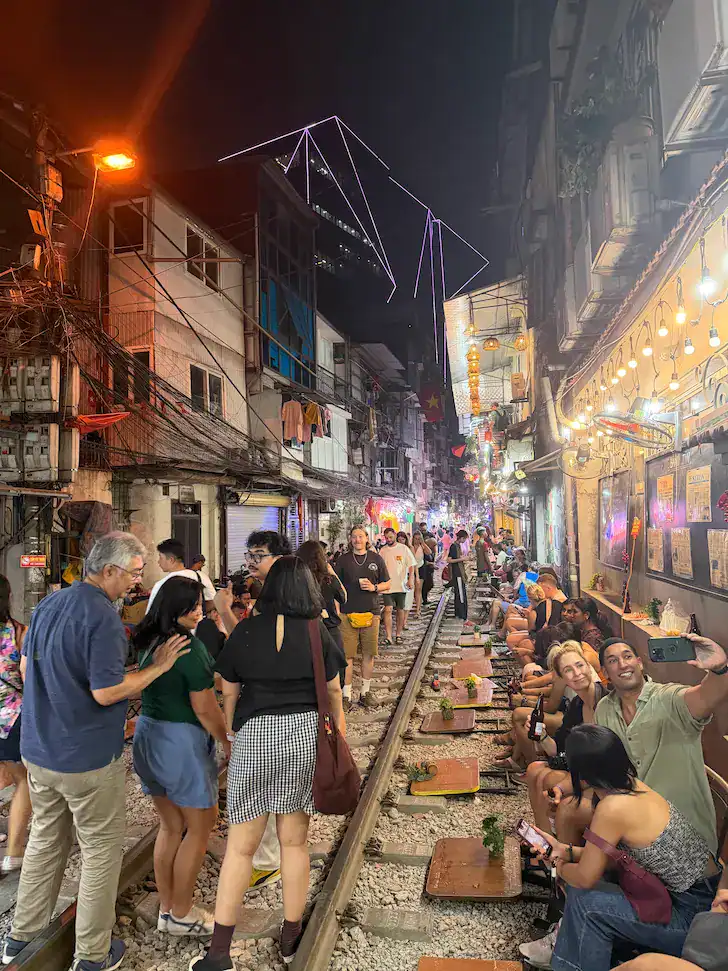
- Train Street – Hanoi’s most iconic sight, a narrow alley where trains pass within inches of café tables!
- Temple of Literature – Vietnam’s first university, dating from 1070 and dedicated to Confucius.
- Thang Long Water Puppet Show – centuries-old Vietnamese water puppetry near Hoan Kiem Lake
Where to Eat in Hanoi
Hanoi’s food culture is built around a handful of iconic dishes. Resist the urge to eat in tourist restaurants and see where the locals eat. You’ll be able to try the highlights on a guided Hanoi Street food tour. Often, the best food is on plastic stools at the side of a road!
- Phở bò (beef pho): Hanoi-style pho is cleaner and less sweet than southern versions. Try Phở Thìn on Đinh Tiên Hoàng for a classic bowl.
- Phở Gà (chicken pho): The chicken version of Pho. Phở Gà Nguyệt on Phủ Doãn street is reccomended on the Michelin Guide.
- Bún chả: Grilled pork patties in a sweet, vinegary broth with rice noodles. This is the dish Barack Obama ate with Anthony Bourdain. Bún Chả Hương Liên on Lê Văn Hưu still serves it.
- Bánh mì: Hanoi’s version uses a crispier, lighter baguette than the south. Grab one from a street Banh Mi 25 or Banh Mi Mama in the old quarter.
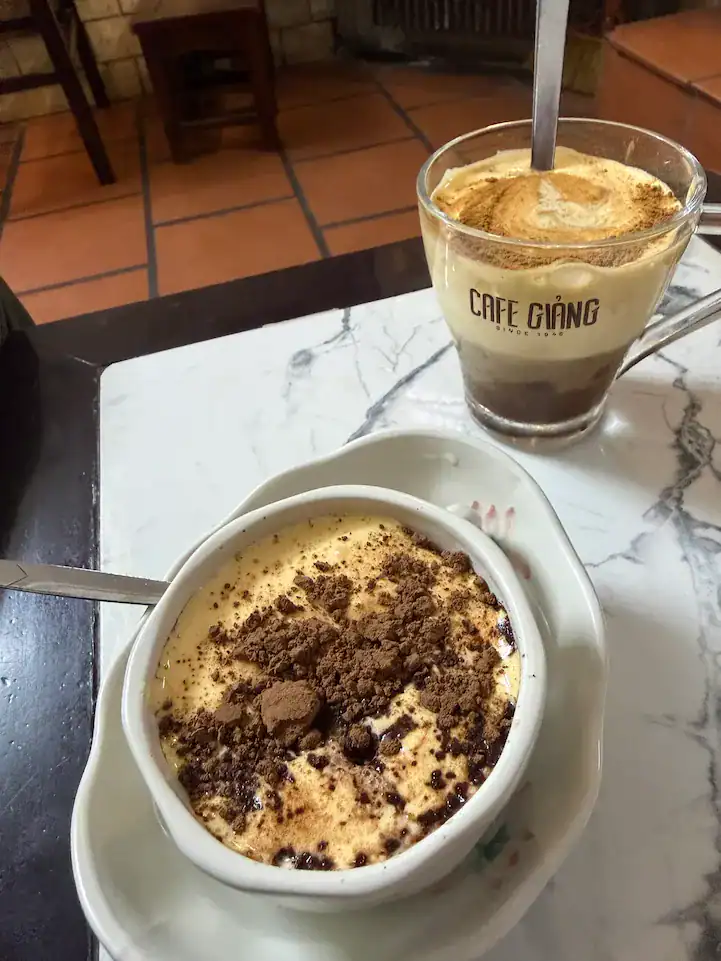
- Cà phê trứng (egg coffee): A Hanoi invention: thick, sweet, and utterly unlike anything else. Try it at Café Giang on Nguyễn Hữu Huân, where it was invented.
- Bia hơi: Fresh draught beer brewed daily, served for pennies at street-side stalls. The corner of Tạ Hiện and Lương Ngọc Quyến is the unofficial beer street of Hanoi.
Where to Stay in Hanoi
The Old Quarter is the most convenient base for your stay, you’re walking distance from almost everything mentioned in the guide. If a calmer, more local area is your vibe, then West Lake (Tay Ho) offers a peaceful respite in the city.
Hanoi Hotel Recommendations:
Budget: Hanoi Centre Silk Classic ⭐⭐⭐⭐
Mid Range: The Legend Hanoi ⭐⭐⭐⭐⭐
Luxury: Sofitel Legend Metropole Hanoi ⭐⭐⭐⭐⭐
Day Trip Option: Ninh Binh
If you have a spare day in Hanoi, then Ninh Binh is the best day trip in the north side of Vietnam. Often called ‘Ha Long Bay on land’, it’s a landscape of rice paddies and limestone mountains dotted with ancient temples. Check out the Trang An or Tam Coc boat tour, both involve rowing through cave systems in a wooden boat!
If you don’t have time for a longer stay in Ninh Binh in your itinerary you could book a day trip to Ninh Binh from Hanoi. This is a great 12-hour day trip covering all the main sites.
Days 4–5: Ha Long Bay
Onto the next phase of the 2 week Vietnam itinerary: Ha Long Bay. This is one of those places that justifies every superlative thrown at it. Nearly 2,000 limestone islands jut out of the bay, draped in jungle and rising from sea that turns jade-green in the morning light. You can do a day cruise, but a two-day, one-night cruise is the best way to experience it.

Choosing the Right Cruise
The quality of your Ha Long Bay experience depends entirely on the cruise you choose and might make or break your 2 week Vietnam itinerary. Budget boats might mean sailing on older vessels, less personalized service and a rushed itinerary. A mid-range or premium boat gives you kayaking stops, cave exploration, a proper sunset deck, and meals worth writing home about. Here are some of my recommendations, which include the Hanoi to Ha Long Bay transfer:
Ha Long Bay Cruise Recommendations:
Budget: 2-Day Ha Long and Lan Ha Bay Cruise with Kayaking
Mid-range: 2-Day Lan Ha & Halong Bay Luxurious Cruise
Luxury: Ha Long Bay 2D1N With a 6 Star Cruise
Check out the full guide to Ha Long Bay Cruise options for all budgets: Click here
What to Expect on a Ha Long Bay Cruise
A typical two-day cruise itinerary includes kayaking through sea caves and around limestone pillars, a visit to a floating fishing village, sunrise tai chi on the deck, a cooking demonstration, and several stops for swimming. Evenings are spent at anchor in a quiet bay, with dinner on board as the stars appear above the limestone towers.
Tips for Making the Most of Your Time on the Water
- Book at least a 2-day/1-night cruise, day trips barely scratch the surface.
- Bring motion sickness tablets if you’re prone
- Pack light for the cruise itself, leave your main bag at the hotel in Hanoi if you can.
- Sunrise on deck is worth setting an alarm for.

Cruises typically end by 11am, and you can expect to be back in Hanoi by early afternoon. Perhaps take a break and enjoy a luxury spa treatment, or board the overnight sleeper train from Hanoi to Hue to get started with the next stage of your journey in Vietnam.
Days 6–7: Hue
Hue was Vietnam’s imperial capital for over 140 years, and the weight of that history is still everywhere. The Perfume River winds through the city past citadel walls, ornate royal tombs, and pagodas across an impressive complex. This is a significant stop of historical relevance on the 2 week Vietnam itinerary. It’s quieter than Hanoi and Hoi An, and all the better for it.
Getting from Hanoi to Hue
The most scenic option is the overnight train. Book a soft sleeper berth and wake up rolling into Hue in the morning. The journey takes around 13 hours. For the more adventurous, the sleeper bus option is cheaper and takes a similar amount of time as by rail. Alternatively, a short domestic flight takes just over an hour and costs very little when booked ahead.
Hanoi to Hue Transport Options:
Flights: Domestic Flight from Hanoi to Hue
Train: Overnight Train from Hanoi to Hue
Bus: Sleeper Bus from Hanoi to Hue
The Imperial Citadel, Royal Tombs and the Perfume River
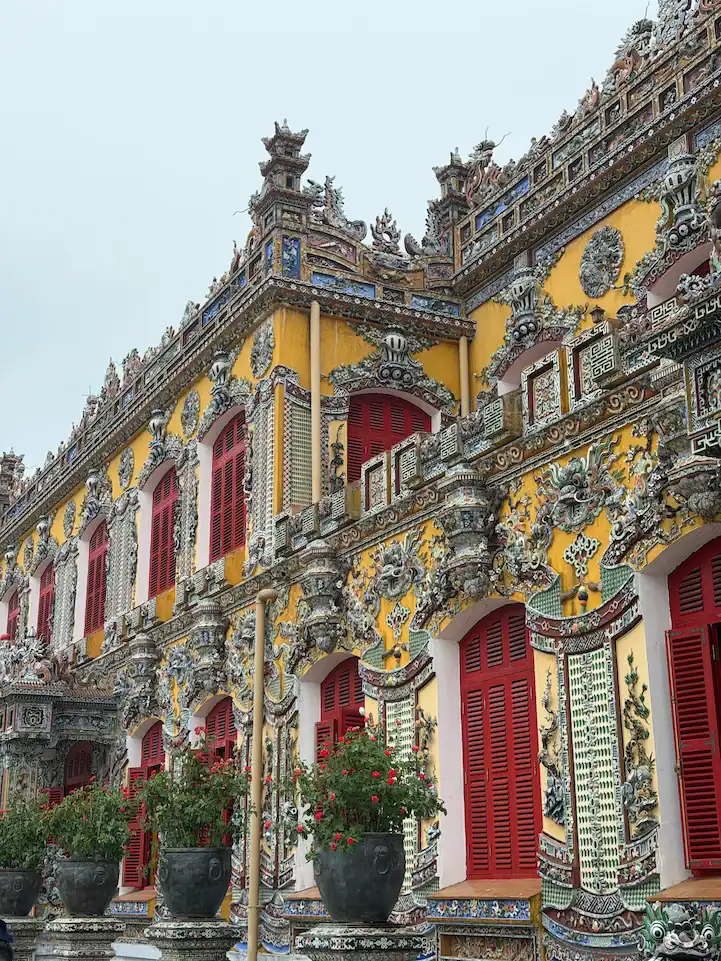
The Imperial Citadel is the obvious starting point! This is a vast, moat-ringed complex modelled on Beijing’s Forbidden City, built in 1804. Much was destroyed during the 1968 Tet Offensive, but the surviving palaces, gates, and pavilions are extraordinary. Allow at least three hours to explore the sprawling complex.
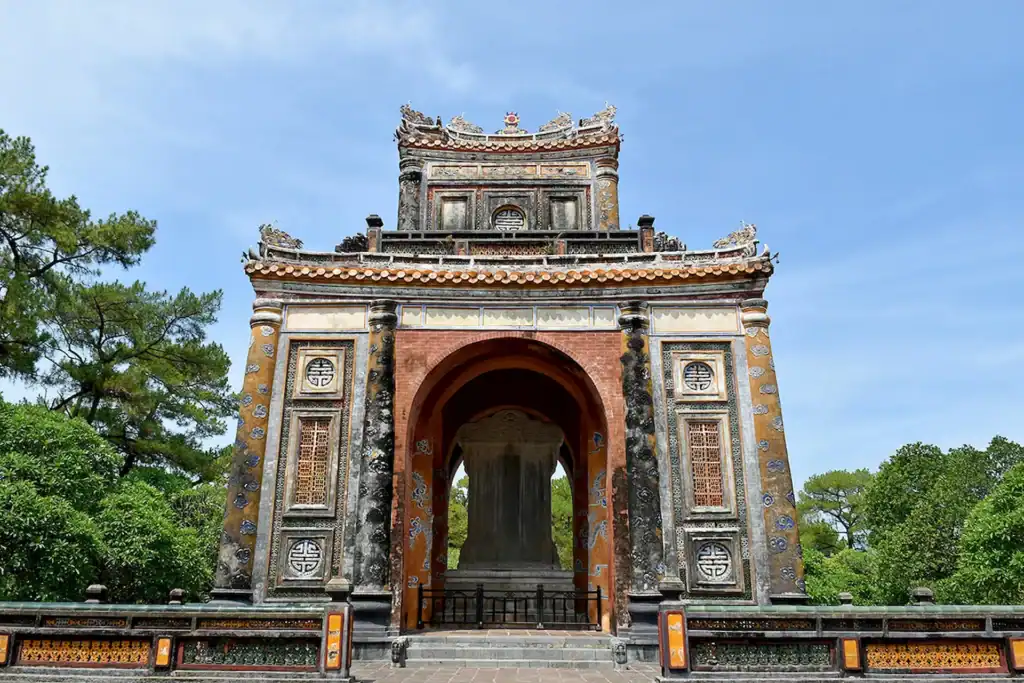
Outside the city, the Royal Tombs are the highlight of Hue. The most impressive are the Tomb of Tu Duc, the Tomb of Minh Mang, and the Tomb of Khai Dinh. Hire a motorbike or join a half-day tour to visit two or three in a morning.
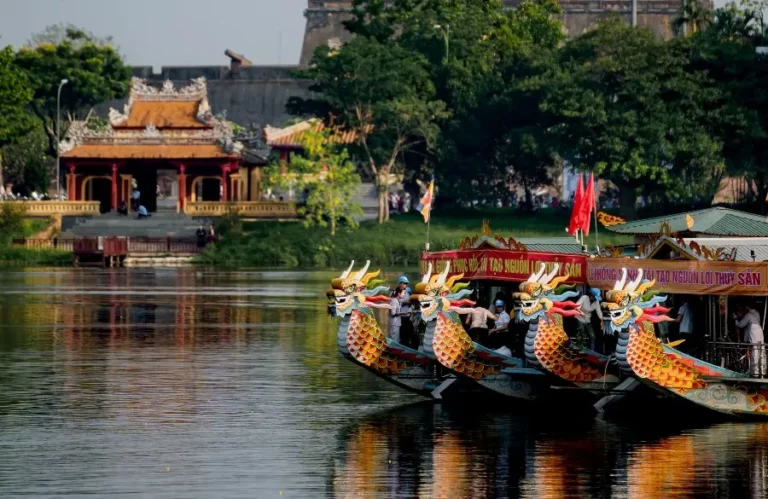
The Perfume River is an 80-kilometer waterway flowing through the heart of Hue. It gets its poetic name from the thousands of fragrant flowers and medicinal herbs that fall into the water from upstream orchards during autumn, giving the river a naturally perfumed aroma. It’s best viewed during golden hour, and I would recommend taking the Hue Sunset Dinner Cruise and making a memory of the evening!
Hue’s Food Scene: The Best City for Vietnamese Cuisine
Hue gave Vietnam some of its most celebrated dishes and its locals will tell you, with complete conviction, that Hue food is the best across this 2 week Vietnam itinerary and quite possibly in the country. Hard to argue with that!
Here are some of the highlights, which you can try during a Hue Local Food Tour.
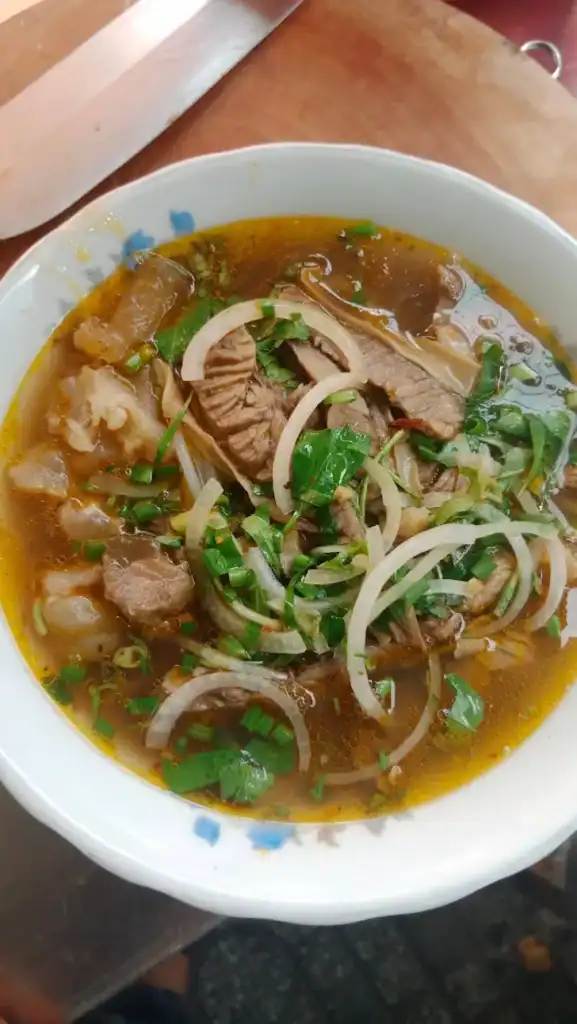
- Bún bò Huế: A spicy, lemongrass-scented beef noodle soup which is richer and more complex than pho. The quintessential Hue dish.
- Bánh khoái: Crispy rice pancakes filled with shrimp, pork, and bean sprouts, eaten with a sesame-peanut dipping sauce.
- Cơm hến: Rice with tiny river clams, peanuts, pork crackling, and chilli.
- Banh beo: Steamed rice cakes topped with dried shrimp.
Where to Stay in Hue
Hue Hotel Recommendations:
Budget: Canary Boutique Hotel ⭐⭐
Mid-range: Vedana Lagoon Resort & Spa ⭐⭐⭐⭐⭐
Luxury: Azerai La Résidence ⭐⭐⭐⭐⭐
Days 8–9: Hoi An
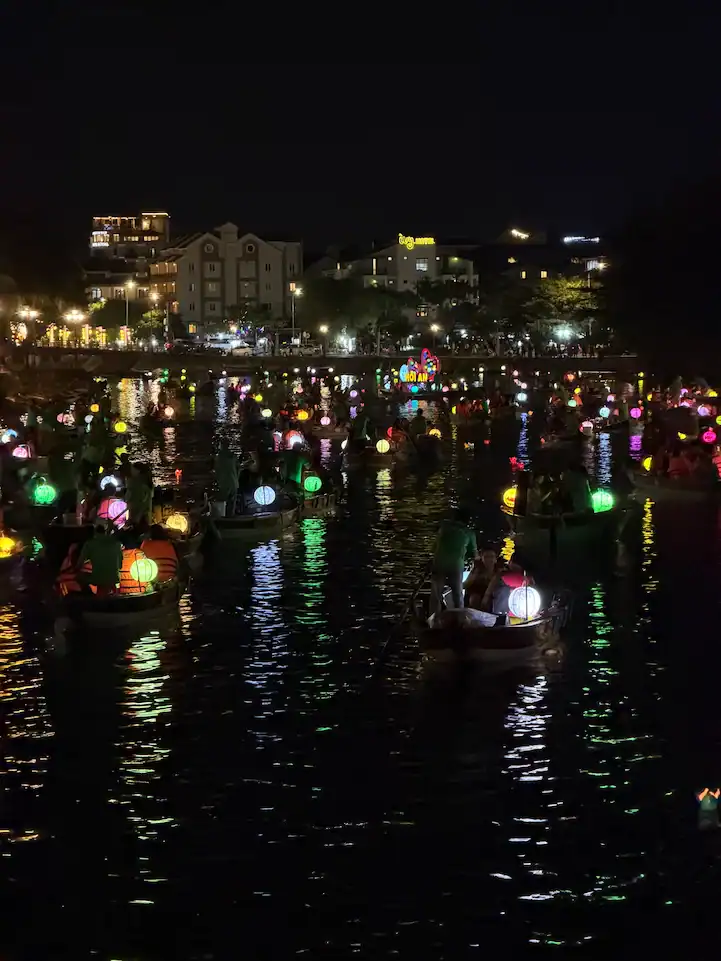
Hoi An is many travelers’ favorite place in Vietnam, and with good reason. It was one of my favorite parts of this 2 week Vietnam itinerary. The Ancient Town is a UNESCO World Heritage Site: a perfectly preserved trading port whose Japanese merchant houses, Chinese assembly halls, and French colonial buildings have barely changed in centuries. At night, silk lanterns turn the streets amber and rose. It is, quite simply, magical. You may wish to spend less time or even extend your stay in Hoi An, my Hoi An Itinerary guide covers what you can do with 1, 2 or 3 days here in further detail.
Getting from Hue to Hoi An (via the Hai Van Pass)
Don’t take the direct bus – the overland journey from Hue to Hoi An via the Hai Van Pass is one of the great drives in Asia. The mountain road climbs above clouds and sea, with views that stop time. The best way to do it is by driving yourself on motorbike or joining a group motorbike tour. The journey takes around 4–5 hours with stops.
Exploring the Ancient Town
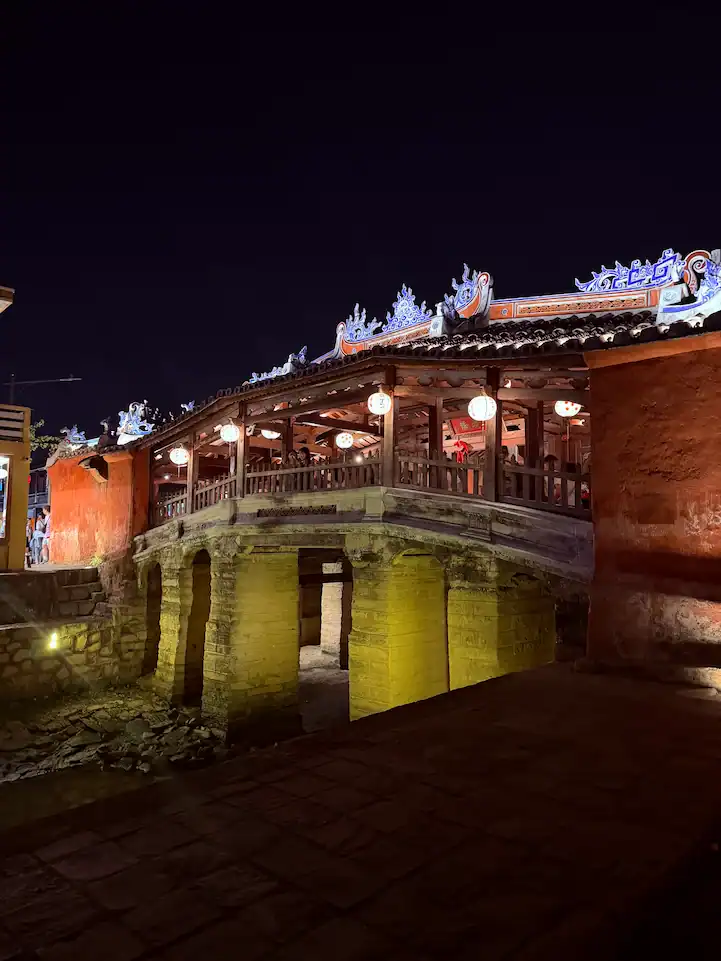
Buy your Ancient Town ticket (VND 120,000) from the tourism office on Phan Chu Trinh. This gives you entry to five heritage sites of your choice, including the Japanese Covered Bridge, Fujian Assembly Hall, and various merchant houses.
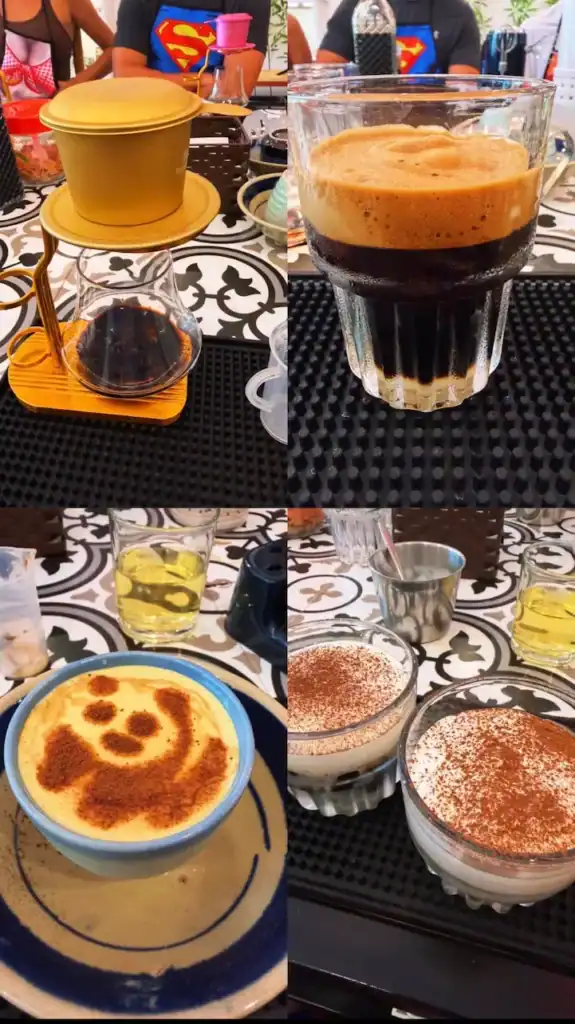
The best strategy is to explore early morning (before 9am, when tour groups arrive) and again at dusk, when the lanterns come on. In between, escape the heat with a Vietnamese cooking class, a bicycle ride to the beaches at An Bang, learn all things coffee at a Vietnamese coffee making workshop or a visit to the My Son Holyland, a cluster of ancient Cham temples in the jungle about an hour from Hoi An.
- Japanese Covered Bridge – the symbol of Hoi An, built in the 1590s.
- Tan Ky Old House – a 200-year-old merchant’s home.
- Fujian Assembly Hall – a gathering place for the Fujian Chinese community.
- An Bang Beach – 15 minutes by bicycle; a long stretch of sand far quieter than the tourist-heavy Cua Dai.
- My Son Holyland – half-day trip to the ancient Cham ruins, best visited at sunrise.
- Hoi An Memories Show – an impressive spectacle teaching you about the origin of Hoi An, with over 500 performers taking part each evening.
Where to Stay in Hoi An
Hoi An Hotel Recommendations:
Budget: Little Hoi An Boutique Hotel & Spa ⭐⭐⭐⭐
Mid-range: Anantara Hoi An Resort ⭐⭐⭐⭐⭐
Luxury: Four Seasons Resort The Nam Hai: ⭐⭐⭐⭐⭐
Day 10: Da Nang (Optional Stop)
Da Nang is Vietnam’s third-largest city and, in recent years, has become a major destination in its own right. It sits between Hue and Hoi An, making it a natural stop though many travellers choose to skip it in favour of an extra night in Hoi An. Here’s how to decide whether to include it during your 2 week Vietnam itinerary or not.
The Marble Mountains and My Khe Beach
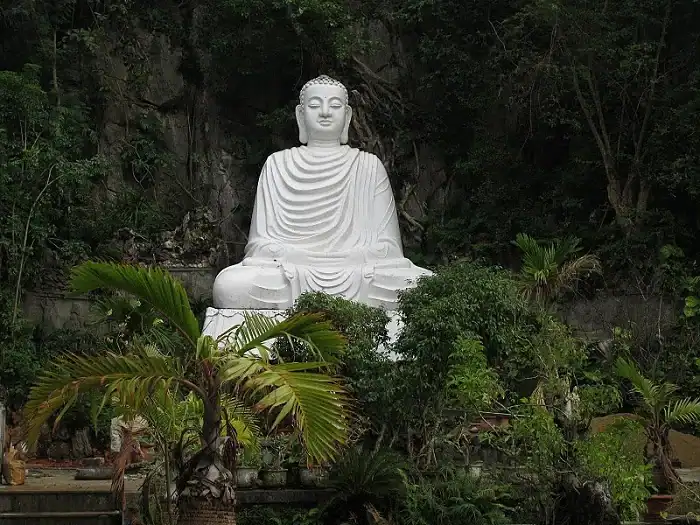
The Marble Mountains are five limestone and marble hills on Da Nang’s southern outskirts, riddled with Buddhist shrines and pagodas inside dramatic cave systems. They’re fascinating, and easy to visit en route between Hoi An and Da Nang. My Khe Beach is one of Vietnam’s longest and most beautiful stretches of sand.
Da Nang also has the Golden Bridge. The Instagram-famous span held up by giant stone hands in the Ba Na Hills. It’s undeniably surreal and a major draw, though the Ba Na Hills complex itself is a kitsch French-themed amusement park on a mountaintop!

Skip It or Stay? How to Decide
Stay if: You want beach time, you’re a city person who enjoys urban energy, or you’re a foodie (Da Nang’s seafood restaurants are outstanding).
Skip it if: You’d rather spend an extra night in Hoi An or push on quickly to the south. Da Nang is easy to visit as a day trip from Hoi An in any case.
Days 11–12: Da Lat or Nha Trang – Choose Your Adventure!
This is where your 2 week Vietnam itinerary forks. Both Da Lat and Nha Trang are within reach of Da Nang and make natural stops before Ho Chi Minh City. They offer completely different experiences; pick the one that suits your travel style.
Da Lat – The Cool Highland Escape
Sitting at 1,500 metres above sea level in the Central Highlands, Da Lat is unlike anywhere else in Vietnam. The French built it as a hill station in the 1900s, and the legacy is everywhere: baguettes in the morning market, Art Deco villas on pine-covered slopes, and temperatures cool enough to need a jumper. It’s the country’s flower and coffee capital, and a base for outdoor activities from canyoning to cycling.
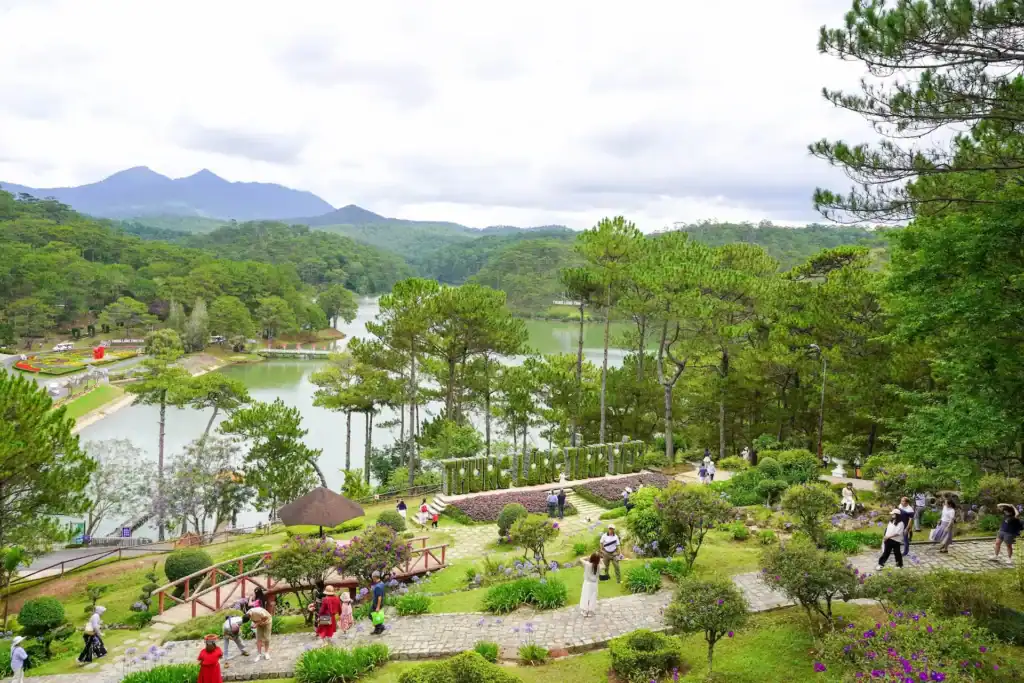
- Xuan Huong Lake and the flower gardens in the centre of town.
- Crazy House (Hang Nga Villa) – an extraordinary piece of architectural surrealism, open to visitors.
- Datanla Falls canyoning – a half-day adventure tour through waterfalls in the forest.
- Coffee plantation tours – Da Lat produces some of Vietnam’s finest arabica. Visit a farm and learn the process.
- Morning market – arrive at dawn for banh mi, avocado smoothies, and the most extraordinary variety of fresh strawberries.
- Outdoor activities tour – race downhill in a luge, tackle the rainbow slide and ride on South East Asia’s longest Alpine Coaster!
Da Lat Hotel Recommendations:
Budget: Crazy House Da Lat ⭐⭐⭐
Mid-range: Colline Dalat ⭐⭐⭐⭐
Luxury: Ana Mandara Villas ⭐⭐⭐⭐⭐
Nha Trang – The Beach Alternative
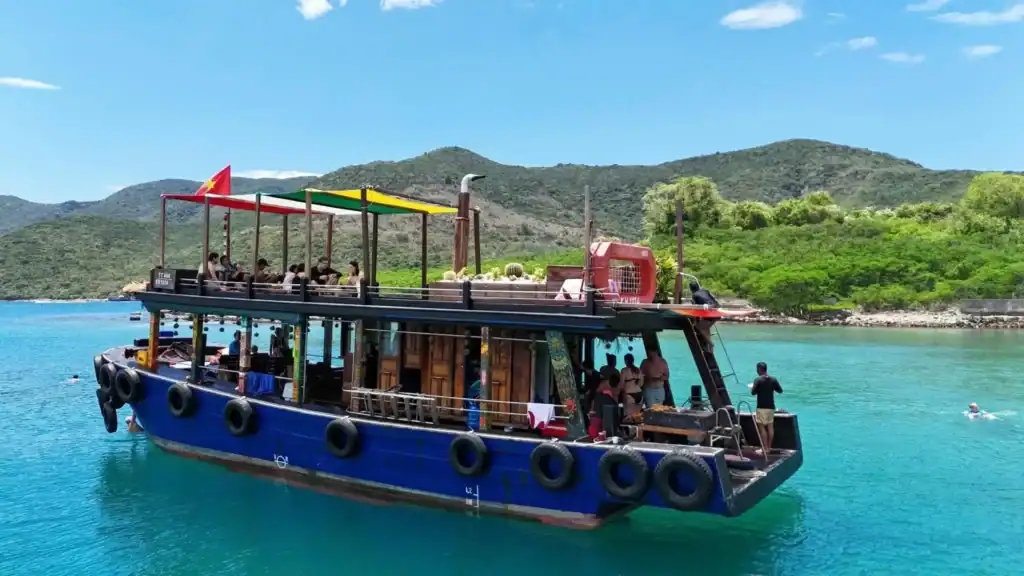
If Da Lat is cool and highland, Nha Trang is hot and coastal. It’s Vietnam’s biggest beach resort city. You’ll find a long arc of white sand backed by high-rise hotels, with a buzzing bar scene and excellent diving in the coral reefs of the surrounding islands. It’s less ‘authentic Vietnam’ than Da Lat, but if you want sun loungers, island hopping, and seafood by the sea, it delivers in spades.
- Snorkelling and diving day trips to the surrounding islands.
- Vinpearl Land – a vast resort island opposite the city, accessible by cable car (longest over-sea cable car in the world).
- Po Nagar Cham Towers – ancient towers from the Cham civilisation.
- Nha Trang Beach at sunset.
Nha Trang Hotel Recommendations:
Budget: Azura Gold Hotel and Apartment ⭐⭐⭐⭐
Mid-range: Champton Nha Trang Hotel ⭐⭐⭐⭐⭐
Luxury: Amiana Resort Nha Trang ⭐⭐⭐⭐⭐
Which One is Right for You?
Choose Da Lat if: You want culture, coffee, cool air, and outdoor adventure.
Choose Nha Trang if: You want beaches, diving, nightlife, and island hopping.
💡 Pro Tip: Both destinations are served by domestic flights from Da Nang. Book ahead, as flights fill up, especially on weekends.
Days 13–14: Ho Chi Minh City
Ho Chi Minh City is the combustion engine of modern Vietnam. It moves fast, it’s loud, it never sleeps, and it will overwhelm your senses in the best possible way. The street food is extraordinary, the history is essential, and the energy is unlike anywhere else in Southeast Asia.
Getting from the Central Region to HCMC
From Da Lat or Nha Trang, the easiest option is a short domestic flight into Tan Son Nhat Airport (SGN). The flight takes 45–60 minutes. Alternatively, a sleeper bus from Da Lat takes around 7–8 hours and costs a fraction of the price.
War Remnants Museum and Cu Chi Tunnels
The War Remnants Museum is one of the most powerful and sobering museums in Southeast Asia. It documents the American War (as it’s known in Vietnam) with unflinching honesty. The photographs in the upper floors are genuinely difficult to look at and absolutely essential viewing. Allow two to three hours for this sobering (yet must-see) visit.
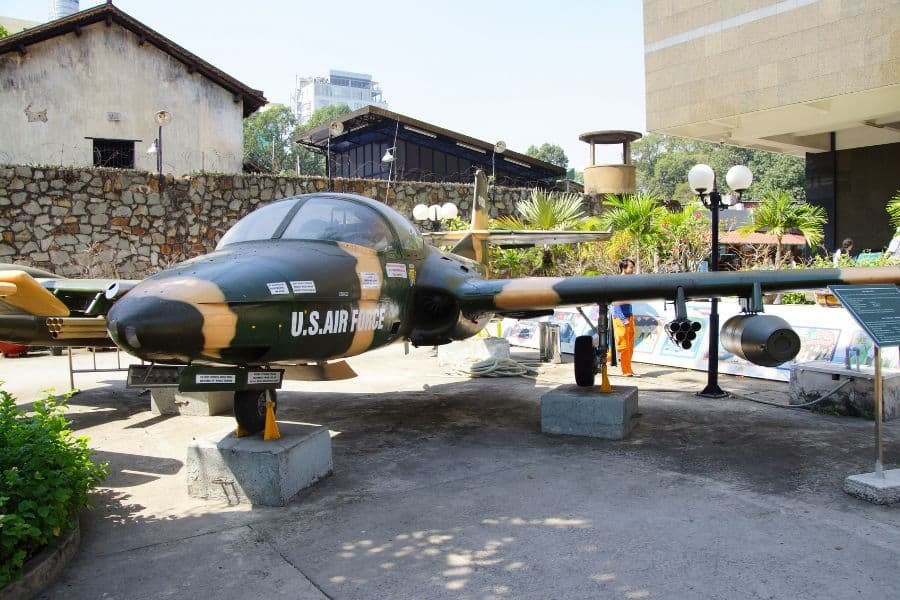
The Cu Chi Tunnels, around 70km north of the city, are an extraordinary feat of wartime engineering: a 250km network of tunnels used by Viet Cong soldiers to live, fight, and move unseen beneath the jungle. You can crawl through a section of the tunnels – widened slightly for tourists, and fire an AK-47 at the shooting range if you choose. A guided Cu Chi tunnels tour from HCMC takes half a day.

Eating and Nightlife in District 1
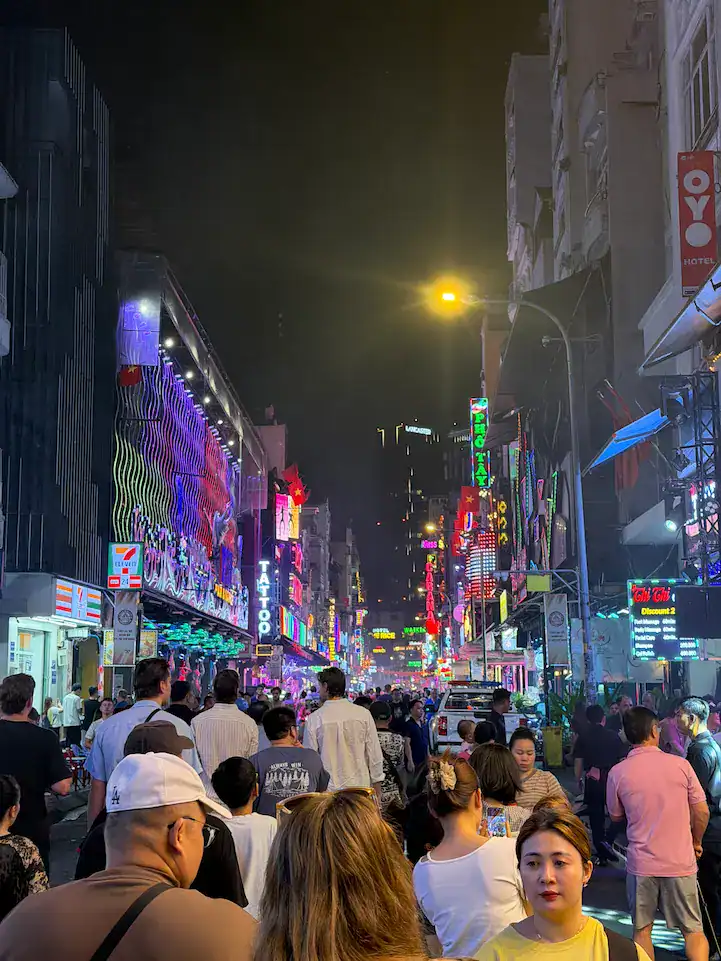
Ho Chi Minh City’s food scene is extraordinary in its range and depth. Eat to your hearts content – from Michelin-starred restaurants to pavement stalls. Explore the variety of food on offer on the back of a scooter with a HCMC Street food tour!
- Bánh mì: The southern version is softer and loaded with more fillings.
- Hủ tiếu: A southern noodle soup with pork and seafood.
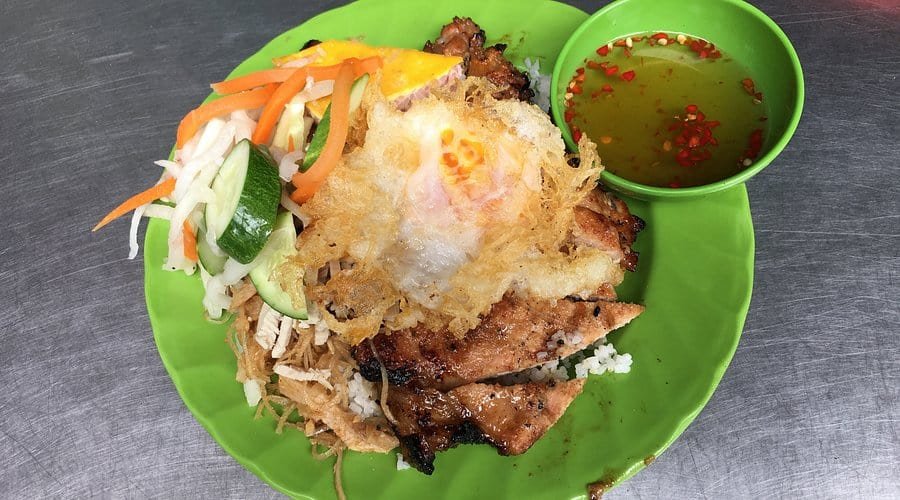
- Cơm tấm (broken rice): Grilled pork ribs or chargrilled pork over broken rice with a fried egg and pickled vegetables.
- Bến Thành Market: More for the experience than the shopping – wander the food stalls for a sensory overload.
- Bùi Viện Street: The backpacker strip – loud, raucous, and enormous fun for one evening.
- Rooftop views: Saigon Saigon Bar at the Caravelle Hotel and the Bitexco Financial Tower’s Sky Deck for views over the city at night.
Day Trip Option: The Mekong Delta
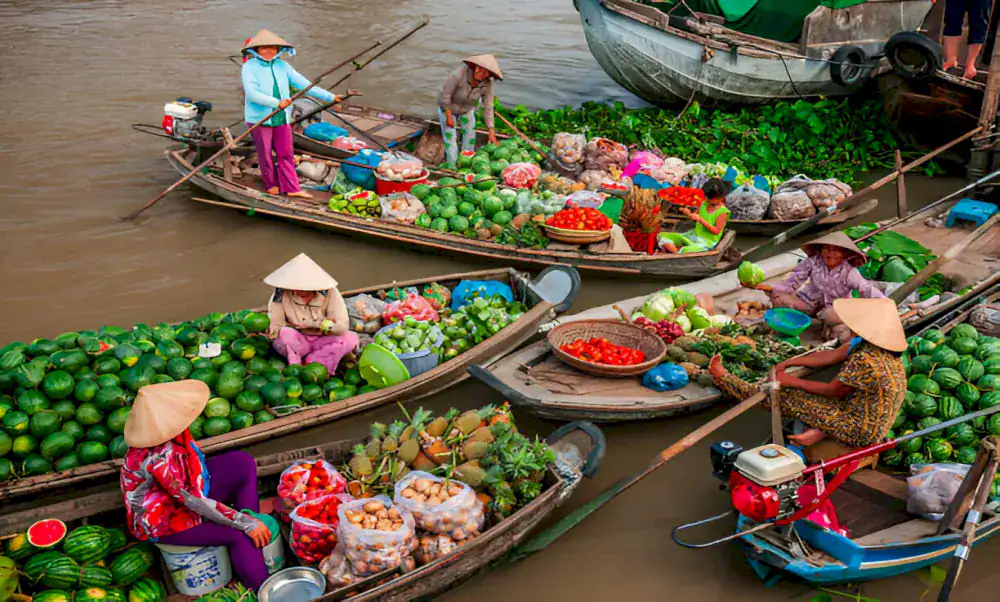
If you have a spare morning or full day during your 2 week Vietnam itinerary, the Mekong Delta is the most rewarding day trip from HCMC. The river delta that feeds much of Southeast Asia is a world of floating markets, rice paddies, fruit orchards, and stilted villages. My Tho and Ben Tre are the closest access points. A guided boat trip through the narrow canals and out to a floating market is an experience unlike anything else in Vietnam.
Where to Stay in Ho Chi Minh City
HCMC Hotel Recommendations:
Budget: The Common Room Project (Hostel, with Stylish Private Room Option)
Mid-range: Triple E Metro Ben Thanh ⭐⭐⭐
Luxury: Park Hyatt Saigon ⭐⭐⭐⭐⭐
Practical Tips for Your Vietnam Trip
Visas and Entry Requirements
UK, US, EU, Canadian, and Australian passport holders can enter Vietnam visa-free for up to 45 days which is ample for this 2 Week Vietnam Itinerary. You’ll need a valid passport with at least 6 months remaining validity. Check the latest visa rules before you travel, as they can change.
💡 Pro Tip: Apply for an e-visa in advance if you’re staying longer than 45 days, or if your nationality isn’t on the visa-exempt list. The e-visa process takes 3–5 working days and costs $25 USD.
Budget Breakdown: How Much Does 2 Weeks in Vietnam Cost?
Vietnam is excellent value. Here’s a rough daily budget per person across this 2 Week Vietnam itinerary:
- Budget traveller (hostels, local food, buses): $35–$50/day
- Mid-range (boutique hotels, some restaurant meals, domestic flights): $80–$120/day
- Comfortable to luxury (4–5 star hotels, guided tours, fine dining): $150–$300+/day
The biggest cost variable is accommodation. Book hotels in advance for peak season (December–March) or major holidays like Tết (Vietnamese New Year).
What to Pack
- Lightweight, breathable clothing – linen and merino wool are ideal.
- A light rain jacket or packable waterproof – essential for Ha Long Bay and Hoi An in season.
- A light layer for Da Lat – it genuinely gets cold at night in the highlands.
- Sunscreen
- A small day backpack for city exploration.
- A power bank – charging points on buses and trains are unreliable.
- Copies (digital and paper) of your passport, insurance, and booking confirmations.
- E-Sim – essential to stay connected during your stay, providers such as Airalo offer affordable prices.
Safety Tips and Common Scams to Avoid
Vietnam is generally very safe for tourists, but a few scams are worth knowing about:
- Local Taxi overcharging: Always agree on a price before getting in. Better yet, use Grab.
- Cyclo scams in Hanoi’s Old Quarter: Agree on price and route in writing before you climb in.
- Shoe cleaning scams: Someone offers to clean your shoe unprompted, then demands a large fee.
- Fake travel agencies: Book tours through your hotel or a well-reviewed agency. Avoid unsolicited offers on the street.
- Metered taxis vs. fake meters: Use Grab or only take metered taxis.
Essential Vietnamese Phrases
- Xin chào (sin chow) – Hello
- Cảm ơn (gam uhn) – Thank you
- Bao nhiêu tiền? (bow nyew tyen) – How much does it cost?
- Tôi không hiểu (toy khong hyew) – I don’t understand
- Cho tôi… (choh toy) – I’d like… (use before ordering food)
- Không cay (khong ky) – Not spicy (useful!)
💡 Pro Tip: Download Google Translate. The camera translation feature is invaluable for deciphering menus and other signs!
Final Thoughts: Is 2 Weeks in Vietnam Enough?
Two weeks in Vietnam is enough to fall completely in love with it, but not enough to feel like you’ve seen everything. You’ll leave wishing you’d had time for Sapa’s rice terraces in the north, the Ha Giang loop, Phú Quốc island in the south, and the pristine beaches of Phong Nha.
That’s the beautiful thing about Vietnam: it rewards return visits. The country is large enough to spend a month and still feel like you’ve only scratched the surface, yet compact enough that even two weeks delivers an extraordinary range of experiences.
Follow this itinerary, stay curious, eat everything, and say yes to whatever the country puts in front of you. Vietnam will do the rest.
Have questions about this itinerary? Drop them in the comments below. I read and reply to every one. And if this guide helped you plan your trip, save it to Pinterest or share it with someone who’s dreaming of Vietnam!
Check Out My Other Hanoi Vietnam Guides
3 Day Hanoi Itinerary: The Complete Guide To Your First Visit
Where to Stay in Hanoi: The Best Hotels and Areas
Things to Do in Hanoi: The 10 Best Things for First Timers
Is Hanoi Worth Visiting: My Honest Review
Best Month to Visit Hanoi: A month-by-month Guide
Best Day Trips from Hanoi: 15 Day Trip Options from Vietnam’s Capital City
What to Eat in Hanoi: 10 of the Best Things to Try
Check Out My Other Vietnam Guides
2 Week Vietnam Itinerary: The Ultimate Guide for First Time Visitors
What is the Best Halong Bay Cruise?: Options for All Budgets
The Best Esim For Vietnam: My Review of 3 ESim Providers