Japan 2 Week Itinerary for First Timers: The Perfect First Visit (2026)
Two weeks is the sweet spot for a first trip to Japan. You get enough time to slow down in the big cities and take a couple of day trips. Even so, you come home without feeling like you sprinted through a checklist. This Japan itinerary for first timers follows the classic route, Tokyo to Kyoto to Osaka, with a quiet detour for Mount Fuji in between.
Below is a day-by-day plan, plus honest notes on trains, budget, and the mistakes that trip people up. Follow it loosely. The best version of any 2 week Japan itinerary leaves room for a wrong turn down an interesting street.
Your 2 week Japan itinerary at a glance
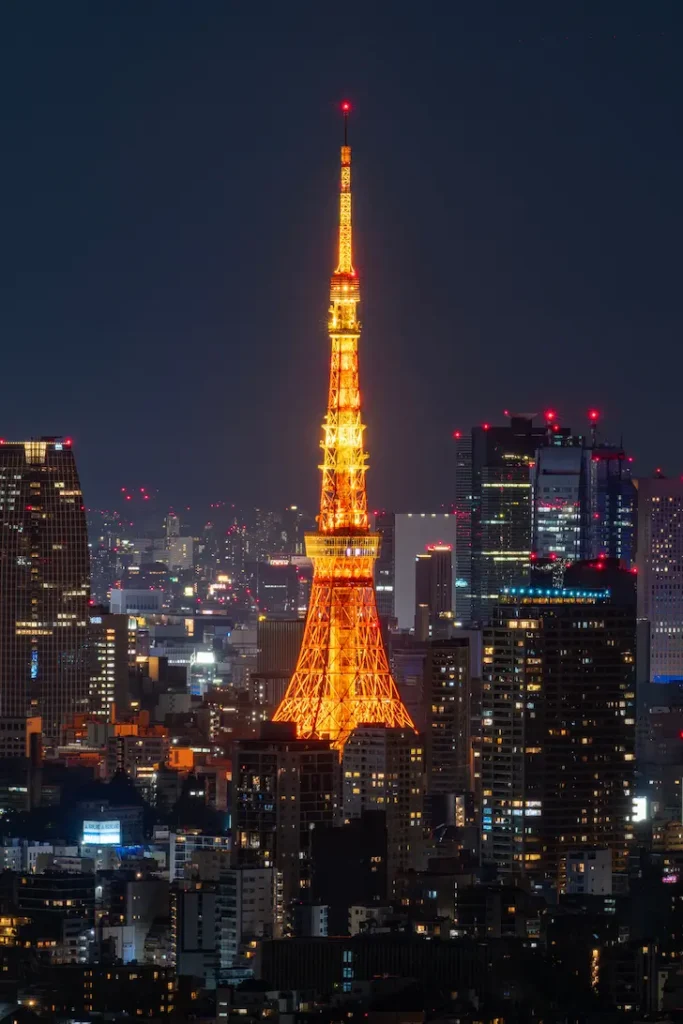
Here is the shape of the trip before we get into the detail. Five nights in Tokyo, two near Mount Fuji, four in Kyoto, and two in Osaka. You can also swap in Hiroshima if you want one more big day out.
| Days | Base | What you will do |
| 1 to 5 | Tokyo | Neighborhoods, a day trip, and a lot of food |
| 6 to 7 | Hakone | Mount Fuji views, the Hakone loop, and an onsen night |
| 8 to 11 | Kyoto | Temples, Fushimi Inari, Arashiyama, and a Nara day trip |
| 12 to 13 | Osaka | Street food, the castle, and an optional Hiroshima trip |
| 14 | Departure | A last bowl of something, then fly home |
Before you go: what first timers need to know
A little prep makes the whole trip smoother. Sort these few things before you fly, and you can spend your actual vacation eating instead of fixing logistics.
When to visit Japan
Spring brings cherry blossoms in late March and April, along with big crowds and high prices. Autumn, roughly October and November, is mild and quiet with good fall color. Summer is hot and humid but full of festivals, while winter is cold, cheaper, and often the clearest time to see Mount Fuji.
If you can pick, aim for late October or early November. The weather behaves, the leaves turn, and the crowds thin out compared to blossom season. Whenever you go, avoid Golden Week in early May, since the whole country travels at once. For festival dates, Japan’s official tourism site is the most reliable source.
Do you need the JR Pass in 2026?
Short answer for this route: probably not. The nationwide Japan Rail Pass jumped about 70 percent in price back in 2023, and a 14-day pass now runs 80,000 yen, around 500 dollars. To earn that back, you would need to ride the bullet train almost every day, and a standard first trip does not.
For Tokyo, Kyoto, and Osaka, individual Shinkansen tickets come to roughly 29,000 yen, about 180 dollars in total. That is far less than even the 7-day pass at 50,000 yen. So book point to point instead, either at the station or online before you go. The official Japan Rail Pass site has a full fare breakdown if you want to check.
Two caveats. First, if you add Hiroshima, run the numbers again, because that long extra leg can tip the math back toward a pass or a regional Kansai pass. Second, prices bought through overseas agents rise again on 1 October 2026, so confirm the current figure before you commit.
Money, IC cards, and staying connected
Japan still loves cash, but tap-to-pay has caught up fast. Grab an IC card, either Suica or Pasmo, for trains, buses, convenience stores, and most vending machines. You can add one to your phone wallet in minutes, then top it up as you go.
You will also want data the moment you land, for maps and train times. Sorting a Japan eSIM before you fly means you skip the airport counter and connect as soon as the plane doors open.
From Narita or Haneda, a pre-booked airport transfer takes the stress out of arrival, especially after a long-haul flight with luggage in tow.
- Book an Airport Transfer from Narita Airport to Tokyo
- Book an Airport Transfer from Haneda Airport to Tokyo
Days 1 to 5: Tokyo
Tokyo is enormous, so think of it as a handful of small cities stitched together. You will not see all of it, and that is fine. Pick a few neighborhoods, go deep, and let the trains do the rest.
If you want to go deeper on the city later, my full Tokyo 5 day itinerary breaks down what you can do in more detail.
Day 1: Arrive and ease in
Day one is for landing and not overdoing it. Drop your bags, walk around your neighborhood, and find dinner close to the hotel. Shinjuku and Shibuya both make good first bases, since they connect everywhere and stay lively late. Fight the urge to nap, then sleep at a normal hour to beat the jet lag.
If decision fatigue hits after a long flight, an evening food tour through Shinjuku‘s lantern-lit alleys takes the pressure off and feeds you well.
Day 2: Shibuya, Harajuku, and Shinjuku
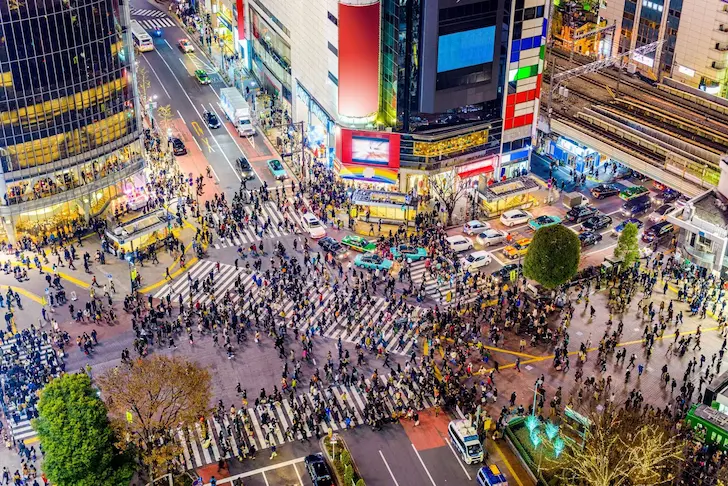
On your second day, start at the Shibuya crossing, then wander up through Harajuku and Omotesando. Meiji Shrine sits right there, a quiet forest a few minutes from the busiest intersection on earth. Later, head to Shinjuku for the evening. The observation deck at the Metropolitan Government Building is free and gives you the whole sprawl at sunset.
Day 3: Old Tokyo and digital art
Day three leans old and new. Spend the morning in Asakusa at Senso-ji, Tokyo’s oldest temple, then browse the Nakamise street for snacks on the way out. In the afternoon, ride over to a digital art museum for an hour of walking through light and water.
Tickets for teamLab sell out fast. Booking a timed slot ahead is the difference between walking straight in and standing outside. Save the evening for Akihabara if you like games, gadgets, and noise.
Day 4: Day trip from Tokyo
Use day four for a day trip. You have two strong options within a couple of hours. Nikko has mountain shrines and waterfalls, while Kamakura offers a giant bronze Buddha and a relaxed beach-town feel. Both are easy round trips by train, so pick the one that matches your mood.
If you would rather not plan the connections, a guided day trip to Nikko handles the trains and the timing for you.
Day 5: A slower last day in the city
On your final Tokyo day, slow down. Spend the morning at the Tsukiji outer market for breakfast sushi, then an hour in a garden such as Shinjuku Gyoen. In the evening, head back to whatever spot you have been meaning to revisit.
If your dates line up with a sumo tournament, or even a morning stable practice, it is worth rearranging the day. Watching a morning sumo practice up close is a memory that sticks.
Days 6 to 7: Hakone and Mount Fuji
Time to leave the city. Hakone, southwest of Tokyo, is a hot spring town with Mount Fuji views on clear days. It makes a gentle break between Tokyo’s pace and Kyoto’s temples.
The classic Hakone loop strings together a mountain railway, a cable car, a sulfur-steaming valley at Owakudani, and a boat across Lake Ashi. It sounds gimmicky. It is also genuinely fun, and the Fuji views from the lake are the reason people come.
Then book a ryokan with its own onsen for the night. You sleep on a futon, soak in hot mineral water, and eat a multi-course kaiseki dinner. It is the kind of evening you will still talk about months later.
Short on time? A full-day Mount Fuji and Hakone tour from Tokyo covers the highlights in one go, if two nights feels like too much for your plan.
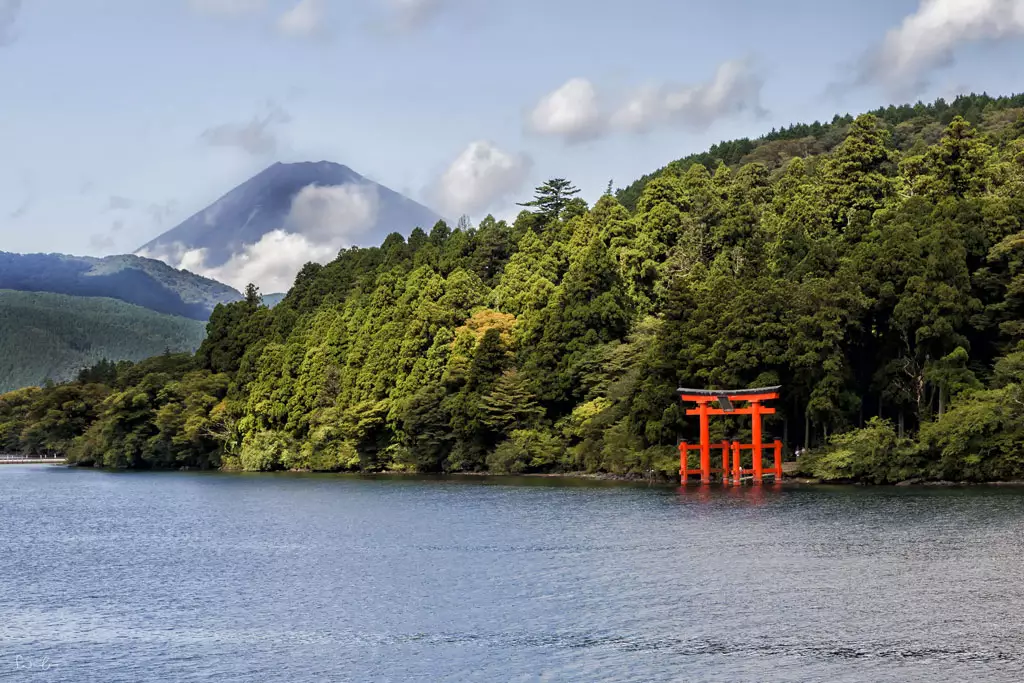
On the morning of day eight, take the train back to Odawara and catch the Shinkansen west to Kyoto. The ride takes about two and a half hours, so you will arrive in time for lunch.
Days 8 to 11: Kyoto
Kyoto is the Japan most people picture before they arrive. Wooden machiya houses, temples by the hundred, geisha districts, and quiet bamboo. Four nights gives you time for the famous sights and a few half-days that nobody needs to rush.
Day 8: Higashiyama and Gion
Start in the eastern hills. Walk up to Kiyomizu-dera for the view over the city, then drift down through the Higashiyama lanes toward Gion as the lanterns come on. Go early, because by mid-morning the main streets fill right up.
Renting a kimono for the day is touristy in the best way, and the old streets are built for the photos.
Day 9: Fushimi Inari and Arashiyama
Day nine is about beating the crowds. Get to the Fushimi Inari gates at sunrise, before the tour buses arrive, and you will have the red torii almost to yourself. Afterward, head west to Arashiyama for the bamboo grove and the monkey park up the hill.
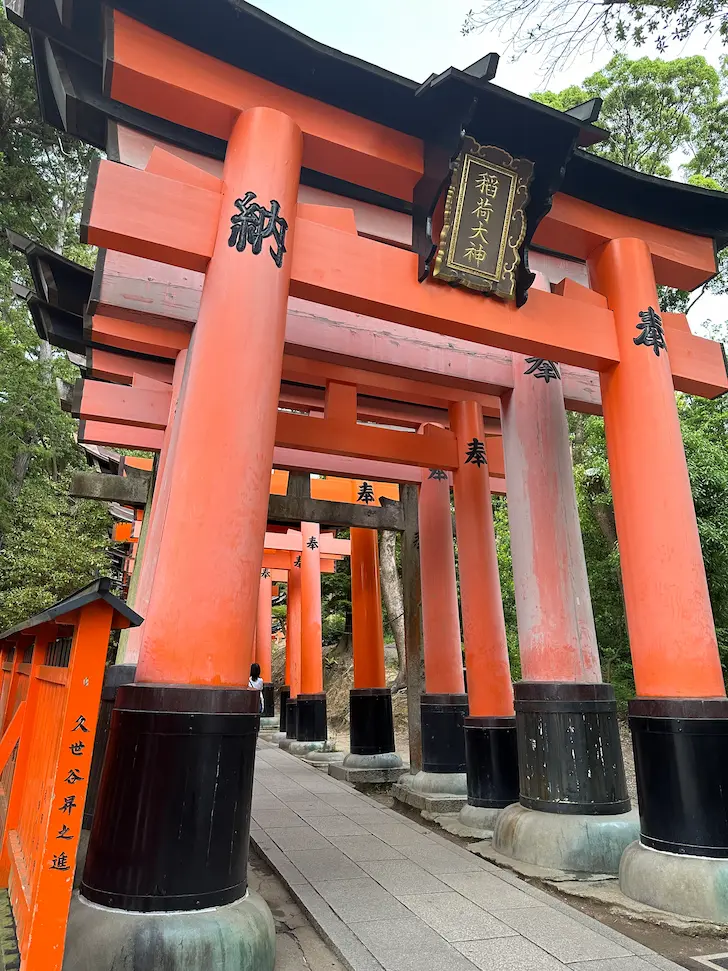
Want a head start and a bit of context? An early-morning guided walk through Fushimi Inari and Arashiyama gets you ahead of the rush and explains what you are seeing.
Day 10: Nara day trip
Use day ten for Nara, less than an hour away. The deer in the park bow for crackers and roam freely. Todai-ji, meanwhile, houses a bronze Buddha so big you can walk under its raised hand. It is an easy, joyful day out.
A half-day Nara and deer park trip from Kyoto pairs the temple and the park without any planning on your part.
Back in Kyoto, a traditional tea ceremony in the late afternoon is a calm counterpoint to a busy week.
Day 11: Golden Pavilion and a loose afternoon
On your last Kyoto day, see Kinkaku-ji, the golden pavilion, in the morning, then graze through Nishiki Market for lunch. Keep the rest of the day loose. Kyoto rewards aimless walking more than most cities do.
Days 12 to 13: Osaka
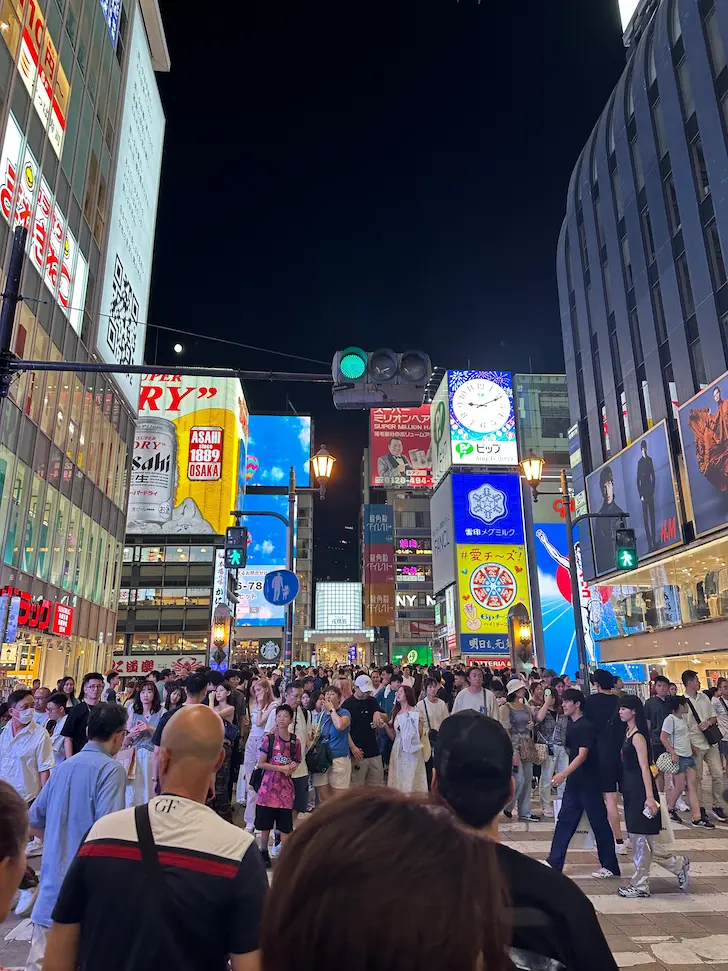
Osaka is Kyoto’s loud, hungry neighbor, half an hour away by train. People come here to eat, and the city knows it. After Kyoto’s hush, the neon and noise of Dotonbori feel like a release.
Day 12: Osaka, end to end
Spend the morning at Osaka Castle, the afternoon shopping around Shinsaibashi, and the night eating along Dotonbori. Try the takoyaki and the okonomiyaki at least once each. Then keep going until you find something you have never seen before.
A guided street food crawl through Dotonbori is the easiest way to taste a lot without queuing at every counter yourself.
Day 13: Your flexible day
Day thirteen is the one you can shape around your interests. If you want one more big trip, Hiroshima and the floating torii on Miyajima island make a moving, full day out by Shinkansen. Prefer something lighter? Himeji Castle is closer, and it is the finest original castle in the country.
A Hiroshima and Miyajima day tour from Osaka handles the trains and the ferry, so you can focus on the day rather than the logistics.
Traveling with kids instead? Give the day to Universal Studios Japan, where skip-the-line passes are well worth it on busy dates.
Day 14: Heading home
Most flights out leave from Kansai International, a short train ride from central Osaka, so you do not need to backtrack to Tokyo. Use the last morning for a final bowl of something and a stop at a convenience store for snacks to take home. Then make your way to the airport with time to spare.
If your flight leaves from Tokyo instead, factor in the Shinkansen back the day before, and spend your last night near the station.
Where to stay on this Japan itinerary for first timers
You will base yourself in four places, so pick neighborhoods that are central and easy to reach by train. In Tokyo, Shinjuku and Shibuya put you on top of the network and within walking distance of food and nightlife. In Hakone, choose a ryokan with a private or public onsen, because that soak is the whole point of the stop. In Kyoto, stay near Kyoto Station or in the Gion and Higashiyama area for quick temple access. In Osaka, Namba and Shinsaibashi keep you steps from the food.
Comparing hotels and ryokan in each city in advance, rather than on arrival, almost always gets you a better rate and a better location.
How much does a 2 week Japan itinerary cost?
Costs swing hard depending on your hotels and how often you eat at a counter versus a sit-down restaurant. Here is a rough per-person guide for two weeks, not counting international flights. Figures are in yen with approximate dollars at about 160 yen to the dollar, which moves often, so treat the dollar amounts as a ballpark.
| Category | Budget | Mid-range |
| Accommodation (13 nights) | ¥130,000 (~$810) | ¥325,000 (~$2,030) |
| Food | ¥56,000 (~$350) | ¥112,000 (~$700) |
| Trains, including Shinkansen | ¥40,000 (~$250) | ¥55,000 (~$345) |
| Activities and entry fees | ¥25,000 (~$155) | ¥50,000 (~$310) |
| Approximate total | ¥251,000 (~$1,570) | ¥542,000 (~$3,390) |
You can go lower with hostels and convenience store meals, or much higher with luxury ryokan and tasting menus. The trains and entry fees barely move, so your room and your appetite decide the rest.
First timer tips and etiquette
None of these are hard rules, but they smooth the way and keep you from standing out for the wrong reasons.
- Carry a little cash. Many small restaurants, shrines, and markets still take only yen.
- Stand on the correct side of the escalator. It is the left in Tokyo and the right in Osaka, so just watch what locals do.
- Keep your voice down on trains. Phone calls are a no, and most people ride in near silence.
- Do not tip. It is not expected anywhere, and it can cause confusion rather than gratitude.
- Slurp your noodles. It is normal, and it actually cools them down as you eat.
- Take your shoes off when you see a raised floor or a row of slippers at the entrance.
- Carry your trash. Public bins are rare, so a small bag in your daypack helps a lot.
- Reserve Shinkansen seats for free at the machine the day before during busy periods.
Japan itinerary for first timers: FAQs
Yes, comfortably. Two weeks lets you see Tokyo, Kyoto, and Osaka properly, with a Mount Fuji detour and a day trip or two. Plenty of people follow this exact Japan itinerary first time they visit, with no tour group and no Japanese, and they manage fine.
Absolutely. Skip the JR Pass, stay in business hotels or hostels, and eat at convenience stores, ramen counters, and food halls. You can run this 2 week Japan itinerary on a modest budget and still eat extremely well.
No, though a few words help. Train signs, menus, and major attractions all have English, and a translation app covers the rest. Still, learning hello, thank you, and excuse me goes a long way.
Book the popular ones early. teamLab, certain restaurants, and theme park entries sell out weeks ahead, while most temples and shrines you can simply turn up to on the day.
Very. Crime against tourists is rare, the trains run on time, and getting lost usually just means a kind stranger pointing you the right way. It is one of the easier countries to travel for the first time.
Final thoughts
This route works because it is simple. Three cities, one mountain town, a couple of day trips, and trains that actually show up. Use it as a frame, not a rulebook. Swap a temple for a coffee shop, linger an extra hour at the market, and let the trip breathe. The first trip is rarely the last one!