Best Time to Visit Hoi An: Month-by-Month Guide (2026)
If you are planning a trip to central Vietnam, timing matters more here than almost anywhere else in the country. The best time to visit Hoi An is the dry stretch from February to April, when the days are warm and sunny, humidity is low, and the Ancient Town glows under clear skies. That said, Hoi An is a year-round destination, and the right month for you depends on whether you are chasing beach weather, lantern-lit nights, smaller crowds, or lower prices.
This guide breaks down the weather month by month, names the single best month to visit Hoi An, flags which month to avoid, and lines up the 2026 festival dates so you can plan around them. Use it to match your travel style to the season and lock in your dates with confidence.
Quick answer
Best overall: February to April – warm, dry, comfortable.
Best for beaches: May to August – hot and sunny, ideal for swimming.
Cheapest and quietest: September and December to January – fewer crowds, lower rates.
Months to avoid: October and November – heavy rain, typhoons, and flooding risk.
Hoi An’s Two Seasons at a Glance
Hoi An has a tropical climate with two clear seasons. The dry season runs roughly from February to August, bringing sunshine, low rainfall, and rising heat as summer arrives. The rainy season runs from September to January, with cooler air, frequent showers, and a real risk of storms and flooding in the peak wet months.
Because the town sits close to the Thu Bon River and the coast, water levels can rise quickly during the heaviest rains. Knowing which season you are walking into is the single most useful thing you can do when deciding the best time to visit Hoi An.
The Best Time to Visit Hoi An Overall: February to April
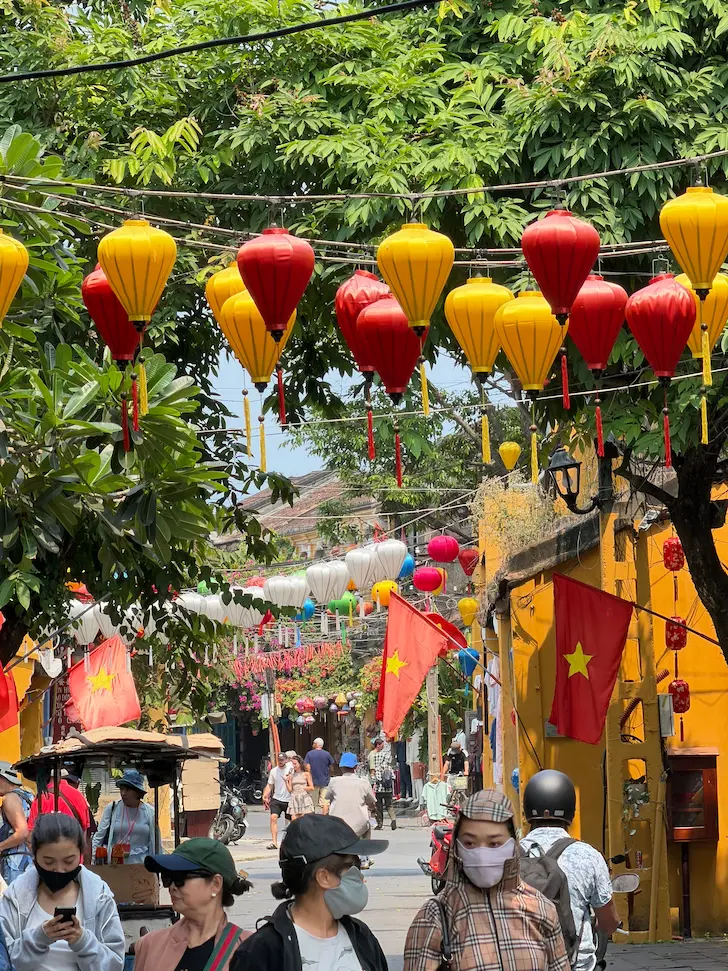
For most travelers, February to April is the sweet spot. Daytime temperatures sit comfortably in the mid-70s to mid-80s Fahrenheit (around 23 to 30°C), humidity stays low, and rainfall is minimal. April is often the driest month of the year. These are perfect conditions for wandering the Ancient Town on foot, cycling out to the rice paddies, and lingering over long riverside dinners.
It is also a great window for getting out of town. A guided cycling tour through the surrounding countryside is far more enjoyable when the weather is cool and dry, and the light in these months is ideal for photography.
If you only have time for one signature experience, the riverside lantern scene is the one to book. Reserving a sunset lantern boat ride on the Thu Bon River lets you float your own candle-lit lantern downstream, and demand is high in these peak months, so it is worth securing a spot in advance.
The Best Month to Visit Hoi An
If you want a single answer, February is the best month to visit Hoi An. The weather has shaken off the last of the winter rain, sunshine returns, humidity is at its most comfortable, and the town is buzzing with the early-year festival energy. March and April are close behind, with April edging out as the driest of all.
February also lands close to the Lunar New Year and the spectacular first full moon of the lunar year (more on the 2026 dates below), so the lantern atmosphere is at its best. The trade-off is that this is peak season: expect higher hotel rates and more visitors, especially around the Tet holiday.
Foodies should make the most of the pleasant weather with a Hoi An street food walking tour, sampling local specialties like cao lau and white rose dumplings before the summer heat sets in.
Hoi An Weather Month by Month
Here is what to expect across the year so you can match the season to your plans. Temperatures are approximate daytime highs.
| Month | Weather | Good for | Crowds & prices |
| January | Cool and sometimes misty, 64–75°F (18–24°C), occasional light rain | Quiet, contemplative town strolls | Low–medium |
| February | Warm, sunny, low humidity, 73–84°F (23–29°C) | Best all-rounder; festivals | High (Tet) |
| March | Warm and dry, clear skies, 75–86°F (24–30°C) | Sightseeing, photography | Medium–high |
| April | Hot and very dry — driest month, up to 86°F (30°C) | Outdoor tours, countryside | Medium |
| May | Getting hot, 79–90°F (26–32°C), still dry | Early beach season | Medium |
| June | Hottest month, up to 95–100°F (35–38°C) | Beaches, islands | Medium (domestic peak) |
| July | Hot and sunny, most sunshine, lowest humidity | Swimming, snorkeling | Medium |
| August | Hot with rising humidity, first showers | Beaches, fewer Western visitors | Low–medium |
| September | Warmer days, rain increases, up to 90°F (32°C) | Value travel, Mid-Autumn | Low |
| October | Wettest month, heavy rain, typhoons, flooding risk | Atmospheric, budget – with caution | Very low |
| November | Very wet, cooler, flooding risk | Quiet, low rates – with caution | Very low |
| December | Rain eases, cooler, 64–77°F (18–25°C) | Festive atmosphere, low crowds | Low–medium |
Which Month to Avoid in Hoi An
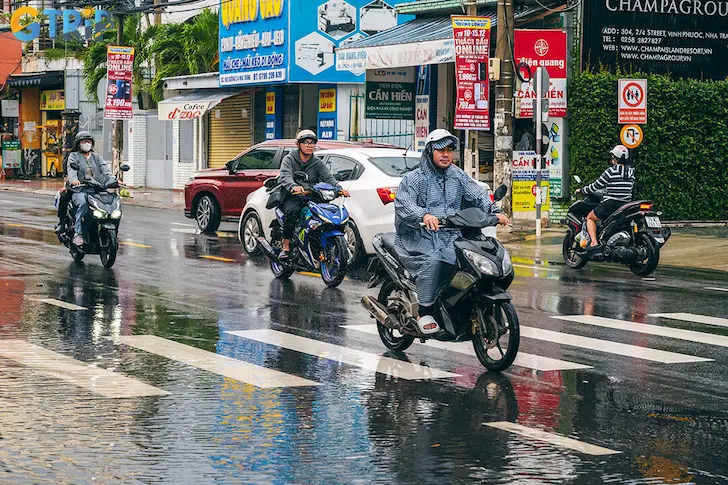
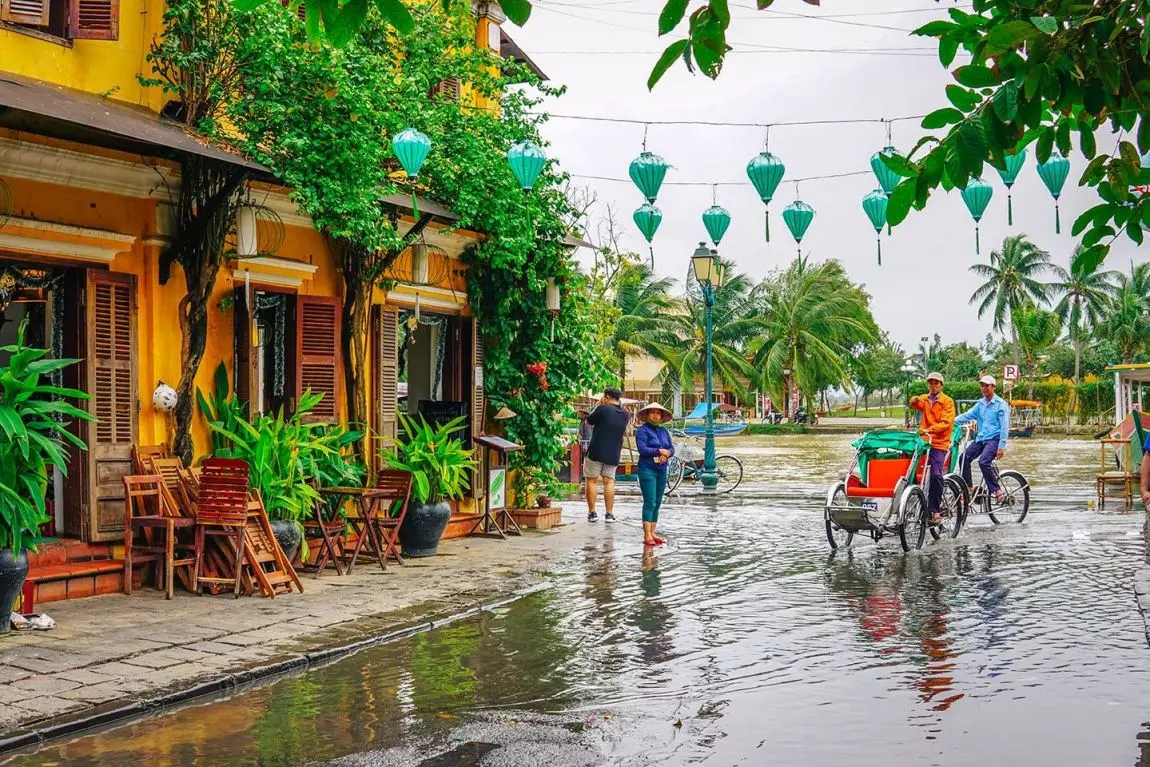
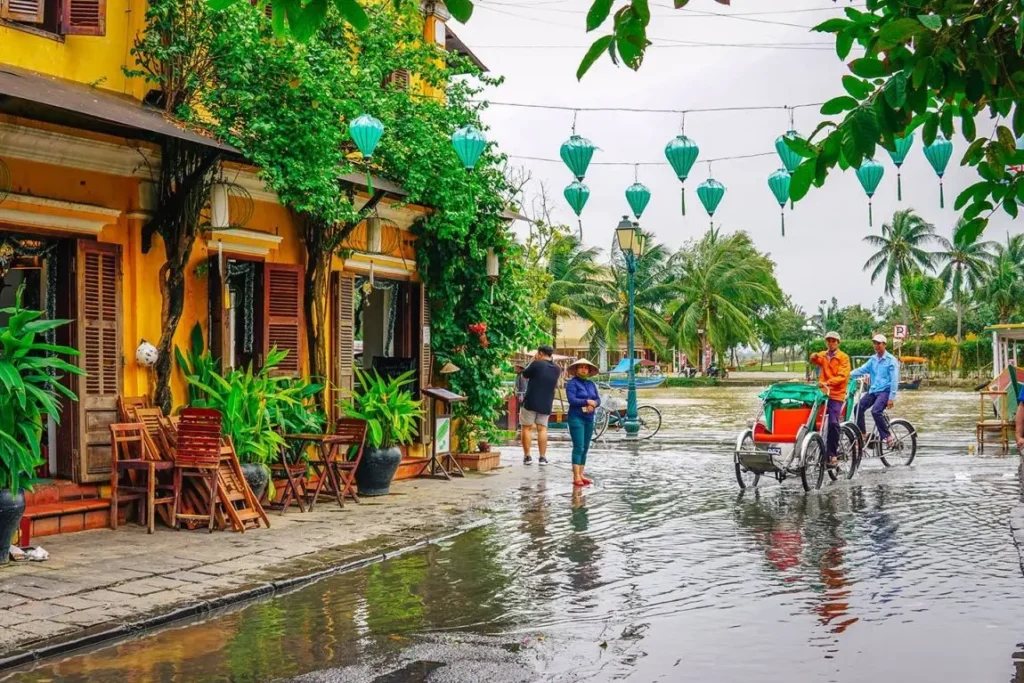
If you want to know which month to avoid Hoi An, the honest answer is October, closely followed by November. These are the peak storm months for central Vietnam. October is typically the wettest month of the year, humidity climbs toward 85%, and typhoons can roll in off the coast. In bad years, the Thu Bon River bursts its banks and water levels in the Ancient Town rise a foot or more, putting streets, shops, and ground-floor cafes underwater.
Flooding does not happen every single year, and some travelers love the moody, reflective atmosphere of a rainy Hoi An. But for a first visit built around walking, cycling, and the beach, October and November carry the highest chance of washed-out plans. If those are your only available dates, build in flexibility, buy travel insurance, and watch the forecast closely.
Best Time to Visit Hoi An for Your Travel Style
Best time for the beach
For sun and sea, May to August is prime time. The heat peaks in June and July, but the skies are clear and the water is warm amd os ideal for An Bang Beach and day trips offshore. A Cham Islands snorkeling day trip is one of the best ways to escape the midday heat and see the coral reefs while the sea is at its calmest.
Best time for fewer crowds and lower prices
Late summer and the early rainy season, roughly August, September, and the cooler December-to-January stretch, bring noticeably smaller crowds and softer hotel rates. You trade some sunshine for elbow room and value, which suits slow travelers and anyone who hates queues.
Rainy afternoons are also the perfect excuse for an indoor activity, and few are more rewarding than a traditional Hoi An cooking class where you learn to make the dishes you have been eating all trip.
Best time for culture and history
The cooler dry months are ideal for exploring beyond the Ancient Town. A My Son Sanctuary half-day tour to the ancient Cham temple ruins is comfortable in February through April but punishing under the June sun, so time it for the shoulder of the dry season.
Festivals and Events in Hoi An in 2026
Hoi An’s calendar is one of the best reasons to time your trip carefully. The headline event is the monthly Lantern Festival, held on the eve of each full moon, when the town cuts its electric lights and the streets and river fill with thousands of glowing lanterns.
Hoi An Lantern Festival 2026 dates
The festival follows the lunar calendar, so the dates shift each year. For 2026, the full-moon lantern nights fall on or around these dates (always confirm locally, as conversions vary by a day or two):
- January 2, 2026
- February 1, 2026
- March 2, 2026
- April 1, 2026
- May 30, 2026
- June 28, 2026
- July 27, 2026
- August 26, 2026
- September 24, 2026
- October 23, 2026
- November 22, 2026
- December 22, 2026
The biggest celebration of all is Tet Nguyen Tieu, the first full moon of the lunar year, expected around March 2–3, 2026.
Tet (Lunar New Year) 2026
Tet falls on February 17, 2026. Hoi An is magical during the holiday, with dragon dances, fireworks, and families visiting the temples, but be aware that many shops and restaurants close for several days and prices spike. Book accommodation and transport well ahead if you are traveling around Tet.
Mid-Autumn Festival
The Mid-Autumn Festival (Tet Trung Thu) lands in late September 2026 and is one of the most photogenic nights of the year, with children’s lantern parades, lion dances, and mooncakes everywhere. Confirm the exact date closer to your trip.
Practical Tips for Planning Your Trip
- Book early for peak season. February to April and the Tet period fill up fast; reserve hotels and headline tours weeks ahead.
- Pack for the season. Light, breathable clothing and strong sun protection for the dry months; a compact rain jacket and quick-dry shoes if you visit between September and January.
- Watch the forecast in the wet season. If you travel in October or November, keep your itinerary flexible and have indoor backups ready.
- Sort your arrival in advance. Hoi An has no airport of its own, so most visitors fly into Da Nang. Booking a private Da Nang Airport transfer to Hoi An takes the stress out of the 45-minute drive, especially after a long-haul flight.
- Stay central or by the beach. For first-timers, a well-located Ancient Town hotel or riverside resort ,puts the lanterns, restaurants, and tailor shops within easy walking distance.
Frequently Asked Questions
February is generally the best month to visit Hoi An, with warm, dry, low-humidity weather and a lively festival atmosphere. March and April are excellent alternatives, and April is usually the driest month of the entire year.
October is the month most worth avoiding, with November a close second. These are the peak storm months in central Vietnam, bringing the heaviest rainfall, the highest humidity, typhoon risk, and the possibility of flooding in the Ancient Town.
Yes, with the right expectations. The rainy season from September to January brings fewer crowds, lower prices, and a quiet, atmospheric beauty. December and January are cooler with lighter rain than the October–November peak, making them a reasonable off-season choice if you stay flexible.
The cheapest time tends to be the low season around September and the late rainy months of November into early December, when demand drops and hotels discount their rates. You accept a higher chance of rain in exchange for the savings and the smaller crowds.
Three to four days is a comfortable amount of time to enjoy the Ancient Town, the beach, a cooking class or day trip, and at least one lantern-lit evening without rushing. Add a day or two if you want to slow down or use Hoi An as a base for exploring Da Nang and My Son.
Final Thoughts: When to Go
The best time to visit Hoi An comes down to what you want from the trip. For the most reliable weather and the best all-round experience, aim for February to April. If you’re looking to do beach days, come between May and August. For value and quiet, look at the shoulder and early rainy months and steer clear of October and November unless you are happy to gamble on the weather. Whichever month you choose, plan your headline tours and accommodation ahead of time, and you will have set yourself up for a memorable stay in one of Vietnam’s most enchanting towns.
Check Out my Other Hoi An Guides
Hoi An Itinerary: The Perfect Guide for your visit
Is Hoi An Worth Visiting: My Honest Review
Where to Stay in Hoi An: The Best Areas and Hotels
Best Time To Visit Hoi An: Month by Month Guide
What to Eat in Hoi An: 12 Must Try Dishes
How To Get To Hoi An: Guide to all Transport Options
Check Out My Other Vietnam Guides
2 Week Vietnam Itinerary: The Ultimate Guide for First Time Visitors
What is the Best Halong Bay Cruise?: Options for All Budgets
The Best Esim For Vietnam: My Review of 3 ESim Providers