What to Eat in Ho Chi Minh City: A First-Timer’s 2026 Food Guide
Trying to figure out what to eat in Ho Chi Minh City can feel overwhelming at first, and honestly, that is half the fun. Vietnam’s biggest city, which locals still call Saigon, basically runs on food. You smell it before you see it: charcoal smoke, lemongrass, fish sauce, and a fistful of fresh herbs. Carts fire up before dawn, and the late-night snail joints keep going long past midnight. So where do you start? Below, I have rounded up the dishes I would send any first-timer to find, plus the best neighborhoods to track them down.
Why Saigon is a food lover’s dream
Southern Vietnamese cooking leans sweeter and herbier than the food up north, and you taste that difference in every bowl. On top of that, the city soaked up Chinese, Khmer, and French influences over the years, so one street can hand you a baguette sandwich, a Cantonese noodle soup, and a French-style iced coffee within ten steps. Best of all, it stays cheap. Most street dishes run from 35,000 to 80,000 VND, which is roughly 1.50 to 3.50 US dollars. Because of that, you can eat your way through six stalls in a day and barely dent your budget.
What to eat in Ho Chi Minh City: 12 must-try dishes
You could spend a month here and not run out of things to try. Still, if you only have a few days, start with these. I have ordered them roughly the way a local day unfolds, from breakfast carts to the late-night beer-and-snail crowd.
Banh mi
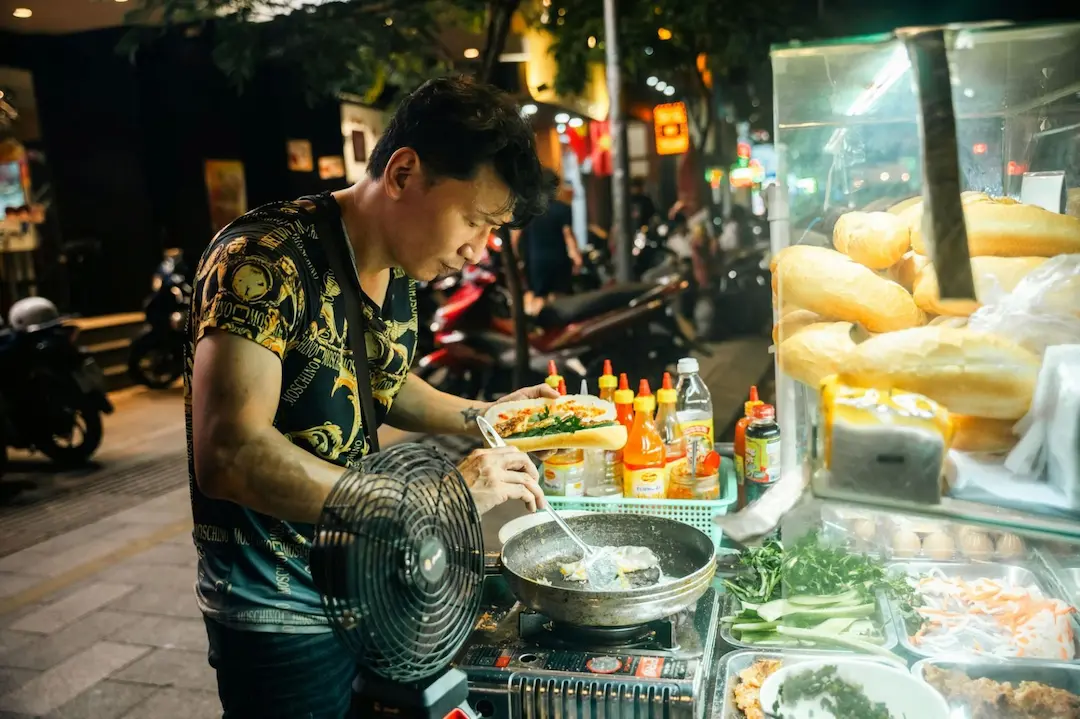
If you eat one thing on day one, make it banh mi. Vendors split a crackly French baguette, then load it with pate, cold cuts or grilled pork, pickled carrot and daikon, cucumber, cilantro, and a few slices of chili. The result is crunchy, salty, sour, and a little sweet all at once. You will find a cart on practically every corner, so grab one whenever hunger hits.
Pho
Pho started up north, but the Saigon version comes out a touch sweeter and arrives with a generous pile of herbs on the side. Cooks simmer the beef broth for hours, then ladle it over thin rice noodles and thinly sliced beef. After that, you doctor your own bowl with bean sprouts, basil, lime, and chili. Locals eat it for breakfast, so do as they do and start your morning with a steaming bowl.
Com tam (broken rice)
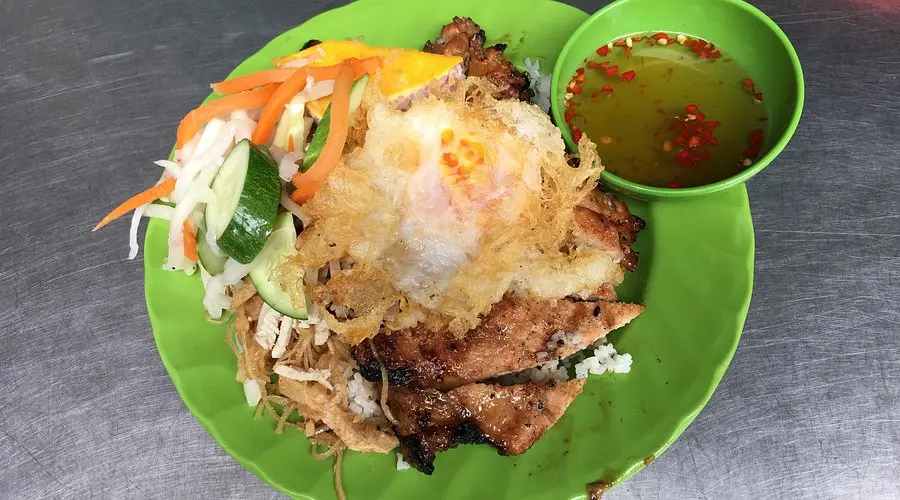
Com tam is the lunch plate I crave most. It pairs broken rice grains with a smoky grilled pork chop, a square of steamed egg loaf, pickled vegetables, and a little cup of sweet fish sauce you pour over everything. It is filling, cheap, and deeply satisfying. For a famous version, head to one of the long-running broken-rice spots around District 1.
Bun thit nuong
Picture a bowl of cool rice vermicelli topped with marinated grilled pork, fresh herbs, pickled veg, and crushed peanuts. Then you pour over nuoc cham, the tangy fish-sauce dressing that ties it together. Because it is light but still hearty, it makes a perfect midday meal when the heat is brutal.
Goi cuon (fresh spring rolls)
Goi cuon are the translucent rolls people often confuse with the fried kind. Inside the rice paper you get shrimp, a little pork, vermicelli, and herbs, and on the side comes a thick hoisin-peanut dip. They are fresh, light, and a good shout if you want a break from rich, brothy food.
Hu tieu
Ask a Saigon local what they actually eat, and many will say hu tieu before pho. This Chinese- and Khmer-influenced noodle soup comes with pork, shrimp, or seafood, and you can order it with broth or ‘dry’ with the soup on the side. The Cholon district does it especially well, so save your appetite for Chinatown.
Banh xeo
Banh xeo is a big, crispy turmeric crepe stuffed with pork, shrimp, and bean sprouts. Here is the part tourists sometimes miss: you do not just eat it with a fork. Instead, you tear off a piece, wrap it in lettuce and herbs, then dunk the whole bundle in fish sauce. It is messy, interactive, and genuinely fun to eat.
Bo la lot
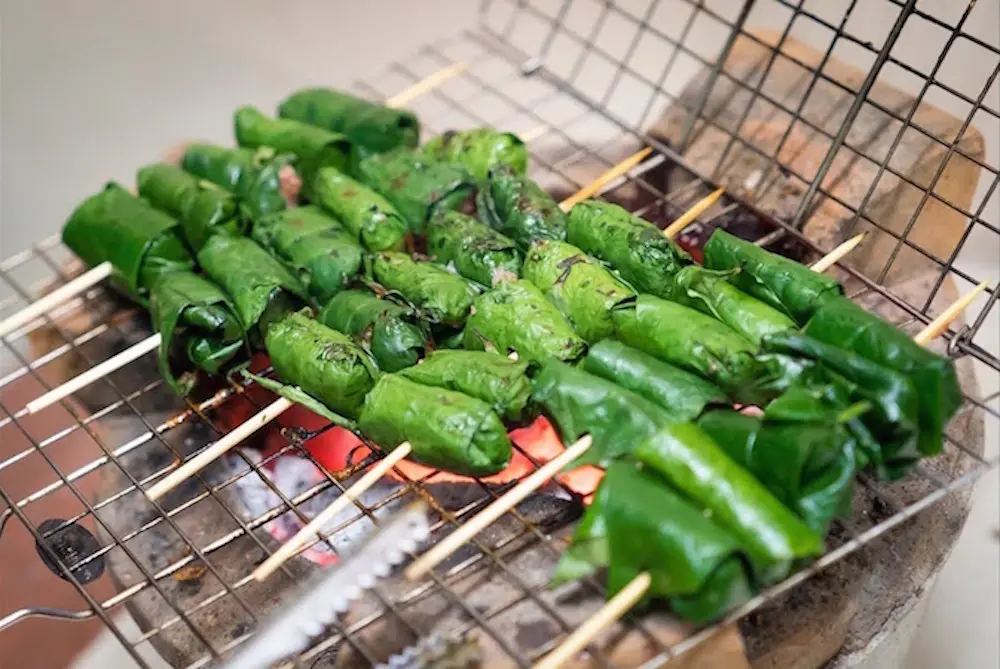
Bo la lot is seasoned beef wrapped in fragrant betel leaves, then grilled over charcoal until the leaves char and the beef turns smoky. You wrap each one in rice paper with herbs and noodles before dipping. If you like the smell of a backyard grill, you will love this one.
Bun bo Hue
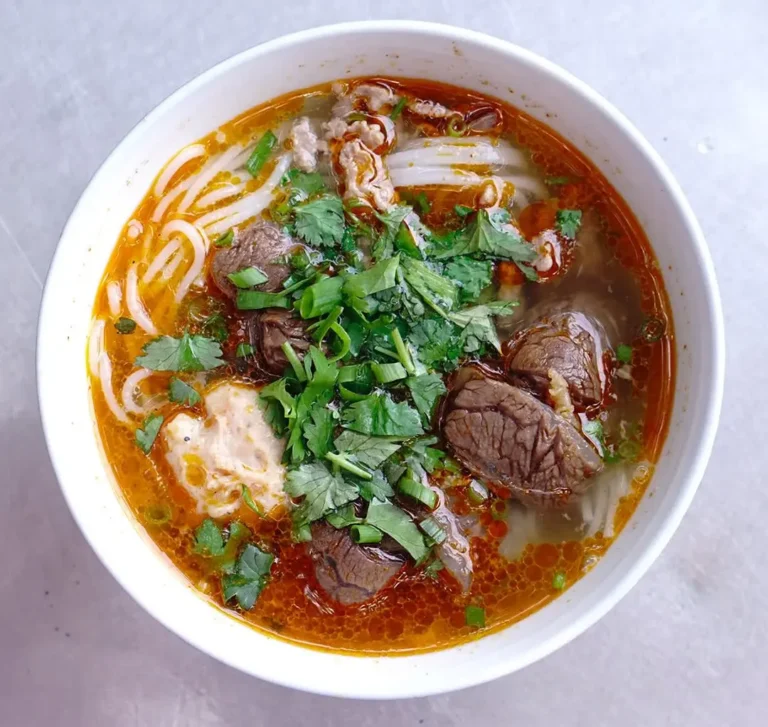
People mix up bun bo Hue and pho all the time, yet they are quite different. Bun bo Hue uses thick round noodles and a broth that is spicier and tangier, thanks to lemongrass and a hit of chili. Although it comes from central Vietnam, you now find excellent versions all over the south.
Oc (snails and shellfish)
Eating oc is less a meal and more a Saigon evening ritual. Friends gather at plastic tables, order plate after plate of snails, clams, and razor clams cooked with garlic butter, chili, or lemongrass, and wash it down with cold beer. So if you want to eat where locals actually hang out at night, this is your move.
Pha lau (for the adventurous)
Feeling brave? Pha lau is a slow-cooked offal stew, rich with coconut and five-spice, usually scooped up with bread or noodles. It is an acquired taste, sure, but the flavor is deep and the texture grows on you. Order a small portion first, then decide.
Ca phe sua da and coconut coffee
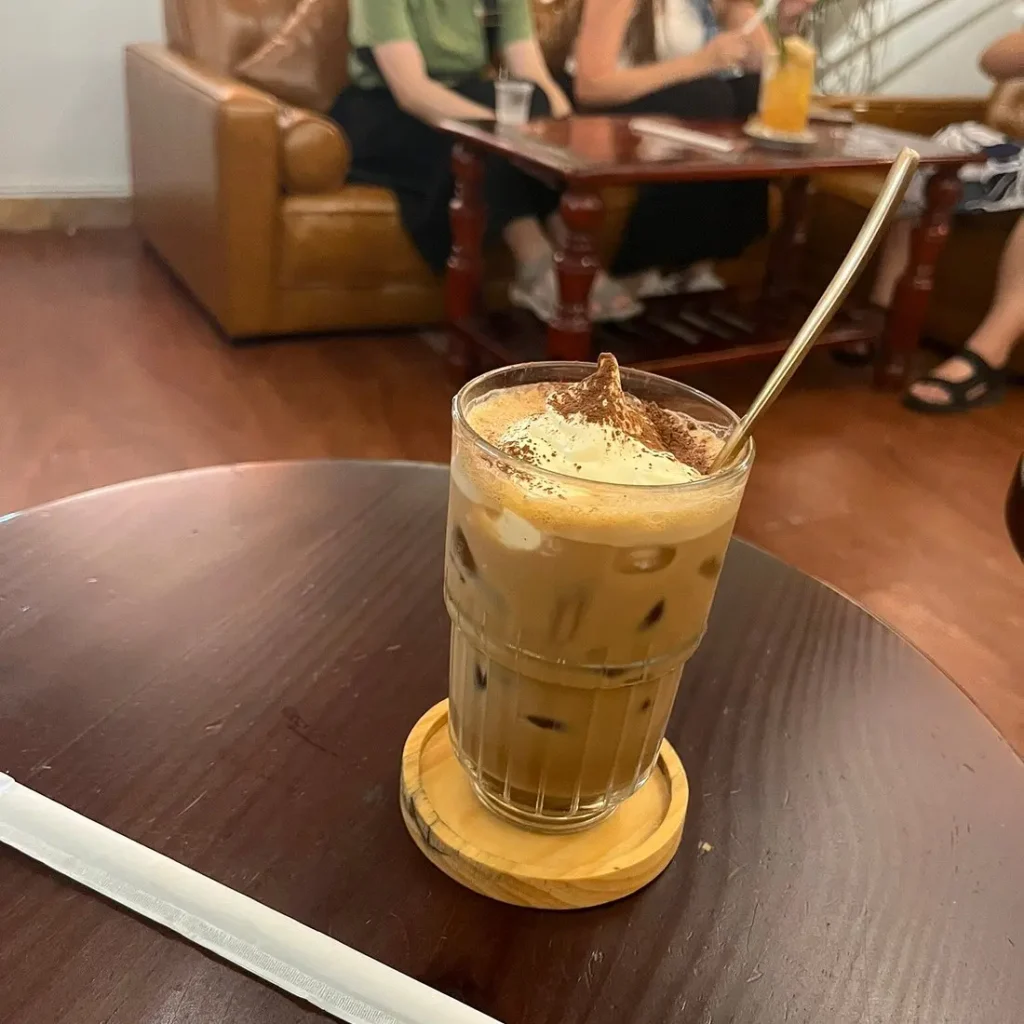
Finally, leave room for coffee, because Saigon takes it seriously. Ca phe sua da is strong dark coffee over ice with sweetened condensed milk, and it hits hard in the afternoon heat. Meanwhile, coconut coffee blends that same brew with blended coconut cream into something close to dessert. Both are easy to find, and both are worth the calories.
Where to eat in Ho Chi Minh City: best neighborhoods
Knowing what to order is one thing, but knowing where to eat in Ho Chi Minh City is what saves you from tourist traps. These three areas cover most of what you need.
District 1
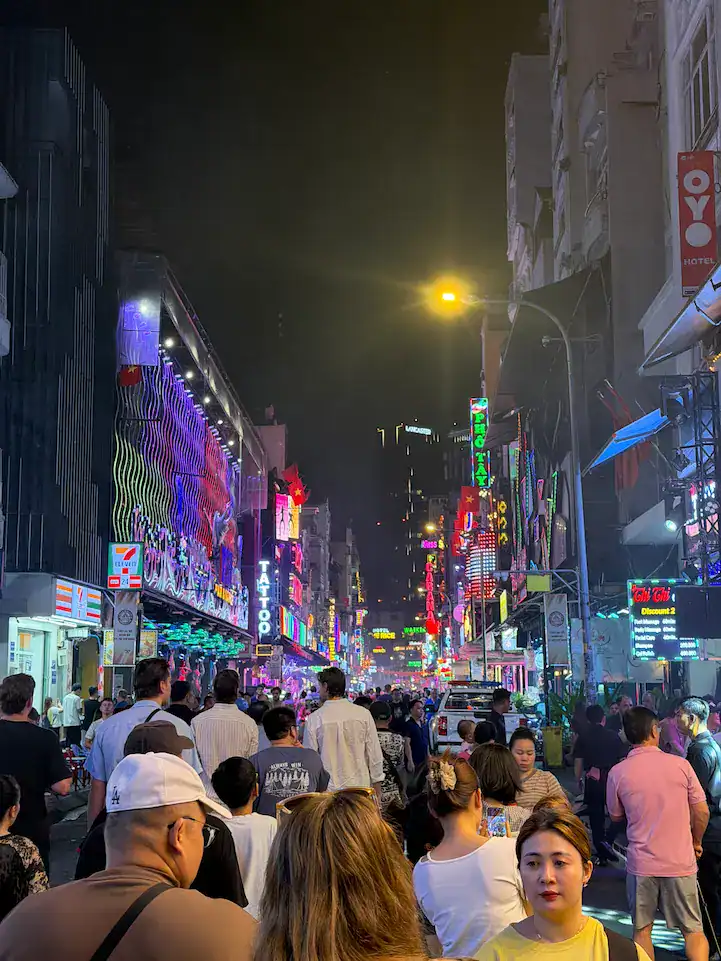
District 1 is the center of the action and the easiest place to start. Around Ben Thanh and Ben Nghe you get classic Saigon dishes with English menus, while the backpacker streets near Bui Vien and Pham Ngu Lao stay busy late. Dong Khoi, by contrast, leans more toward smart cafes and sit-down restaurants if you want to slow down.
District 5 (Cholon, the Chinatown)
Cholon is where I send anyone chasing the best hu tieu and dim sum. Because the area has a deep Chinese-Vietnamese history, the cooking carries flavors you will not find in District 1. Come hungry and wander the side streets rather than sticking to the main road.
Binh Thanh and Phu Nhuan
If you want to eat where locals outnumber tourists, cross into Binh Thanh or Phu Nhuan. Streets like Van Kiep fill up at night with snail stalls and casual eateries, and prices drop noticeably. Few visitors make it out here, which is exactly why it is worth the short ride.
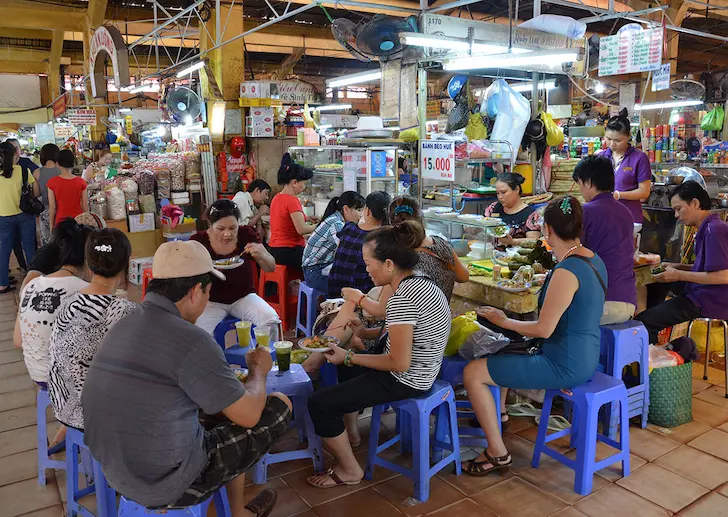
Best places to eat in Ho Chi Minh City: markets and food streets
Some of the best places to eat in Ho Chi Minh City are not restaurants at all. They are markets and dedicated food streets where dozens of vendors sit side by side.
Ben Thanh Market is the obvious first stop, and for good reason. During the day you shop the stalls, then in the evening the surrounding Ben Thanh Street Food Market lights up with grills and beer. For something grittier, head to the snail streets around District 4 after dark, where the seafood is fresh and the atmosphere is loud in the best way.
Should you take a food tour?
Crossing Saigon traffic to reach a stall you cannot read the menu of is intimidating on day one. So if you would rather have a local do the navigating, a guided street food tour by scooter is the fastest way to eat like you have lived here for years.
And if you want to take a piece of Saigon home with you, a hands-on Vietnamese cooking class usually starts with a market visit and ends with you eating what you just made.
Street food tips for first-timers
Eating street food here is safe if you use a little common sense. First, follow the crowds, because a busy stall means fresh turnover and food that has not been sitting out. Next, stick to bottled or filtered water, though ice at established city spots is generally fine. Finally, carry small VND notes, since most vendors will not have change for big bills and almost none take cards.
FAQs
Saigon is best known for banh mi, com tam (broken rice), and hu tieu noodle soup. On top of those, the city is famous for its iced coffee and its late-night snail culture.
If you only try one thing, make it banh mi, since it is cheap, everywhere, and uniquely Saigon. After that, the must eat food in Ho Chi Minh City for most visitors is com tam, followed closely by a bowl of hu tieu.
Yes, for the most part. Choose stalls with a steady line of locals, drink bottled water, and you will rarely have any trouble.
Street meals usually cost between 35,000 and 80,000 VND, or about 1.50 to 3.50 US dollars. Sit-down restaurants cost more, of course, but you can still eat very well on a small budget.
Check out my Other Ho Chi Minh City Vietnam Guides
3 Day Ho Chi Minh City Itinerary: The Complete Guide to Your First Visit
Is Ho Chi Minh City worth Visiting?: My Honest Review
Where to Stay in Ho Chi Minh City: The Best Areas & Hotels
Best Time to Visit Ho Chi Minh City: Month by Month Guide
What To Eat in Ho Chi Minh City: First Timers Guide
How many Days Do You Need in Ho Chi Minh City: My Honest Opinion
Check Out My Other Vietnam Guides
2 Week Vietnam Itinerary: The Ultimate Guide for First Time Visitors
What is the Best Halong Bay Cruise?: Options for All Budgets
The Best Esim For Vietnam: My Review of 3 ESim Providers